- Completed
- 1660s, as part of the New Mosque complex
- Turkish name
- Mısır Çarşısı — the Egyptian Bazaar
- Why 'Egyptian'
- It was endowed with tax revenues from Ottoman Egypt
- Best for
- Spices, Turkish delight, dried fruit and nuts, teas, coffee
- Open
- Daily, including Sundays
- Time needed
- 45 minutes, plus whatever the surrounding streets steal from you
Private tours from €150 per group, per day
Licensed local guide, private car and driver, and skip-the-line priority entrance. The day runs at your pace, and the plan stays yours to change.
Get my free quoteTÜRSAB-licensed agency No. 15746 · nothing to pay to ask · a real person replies within 24 hours
Why it is called the Egyptian Bazaar
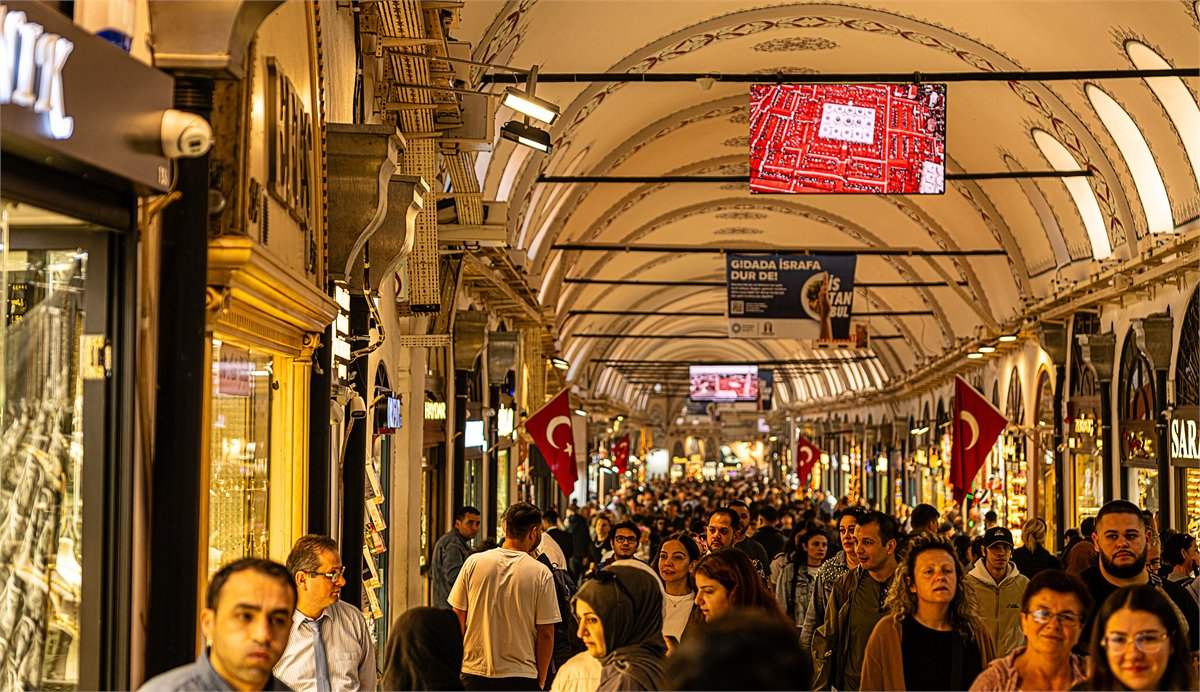
The Turkish name, Mısır Çarşısı, is a small history lesson in itself. The hall was completed in the 1660s as part of the Yeni Cami — the New Mosque — complex beside the Golden Horn, and it was endowed with revenues from the Ottoman province of Egypt. Spices arriving from the east were taxed, sold and redistributed from here, which made this modest L-shaped building a serious node in world trade.
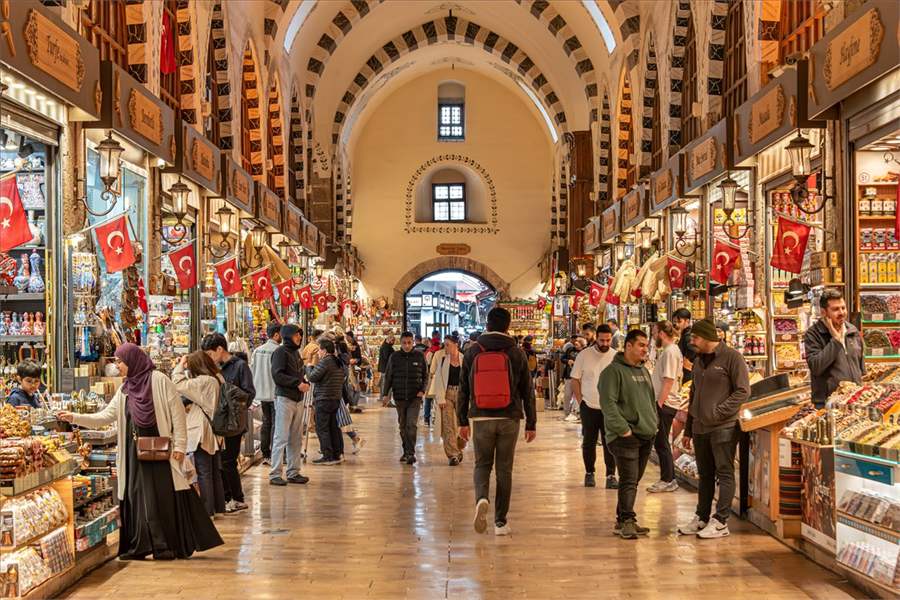
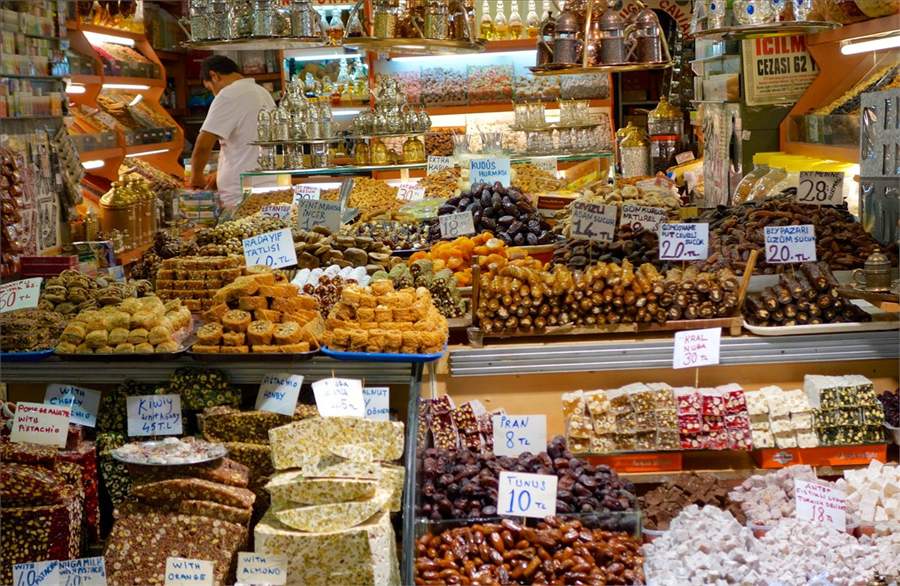
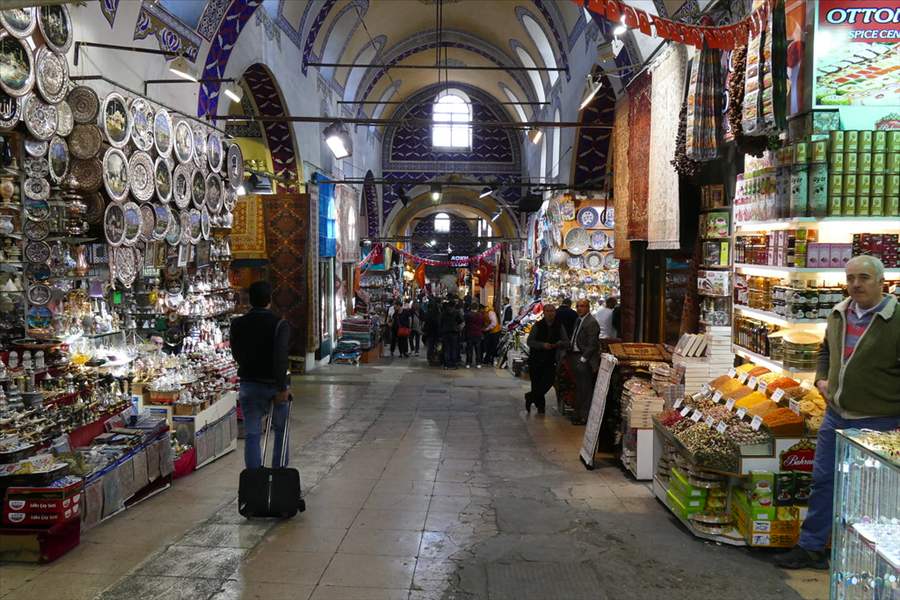
That trade is still the theme, even if a good deal of what is sold now is aimed at visitors rather than cooks. The building itself is worth a moment: warm stone vaults, arched bays, and a diffuse light that makes the colors of the spice pyramids look almost artificial.
What to buy in the Spice Bazaar
Turkish delight (lokum)
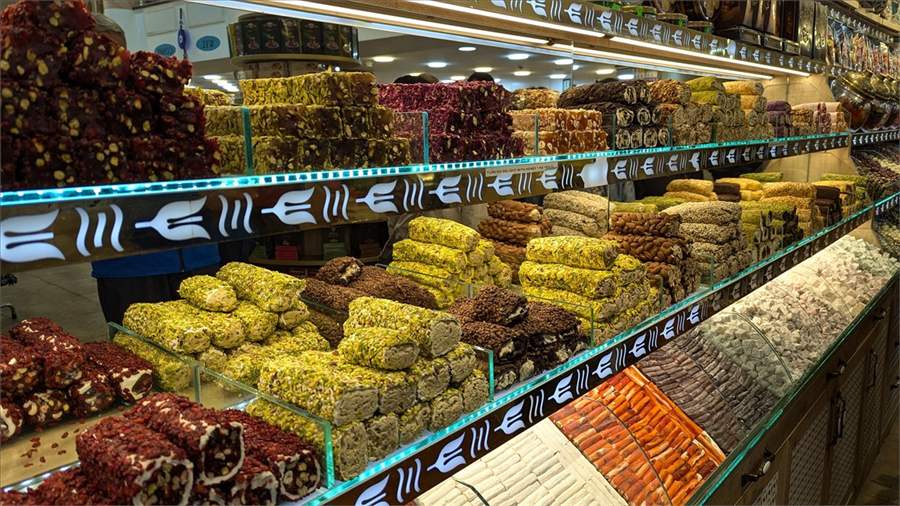
Skip the brightly colored pyramids aimed squarely at tourists and ask for çifte kavrulmuş fıstıklı lokum — double-roasted pistachio delight. It is denser, less sweet and vastly better than the technicolour assortments. Good shops will let you taste before you commit.
Saffron — and how not to be fooled
Real saffron is expensive everywhere in the world, because it is hand-harvested stigmas and it takes an absurd number of flowers to make a gram. If a stall is selling large bags of "saffron" cheaply, it is safflower, sometimes called false saffron. It is a perfectly nice product; it is simply not the same thing and should not cost the same.
Spices, teas and herbal blends
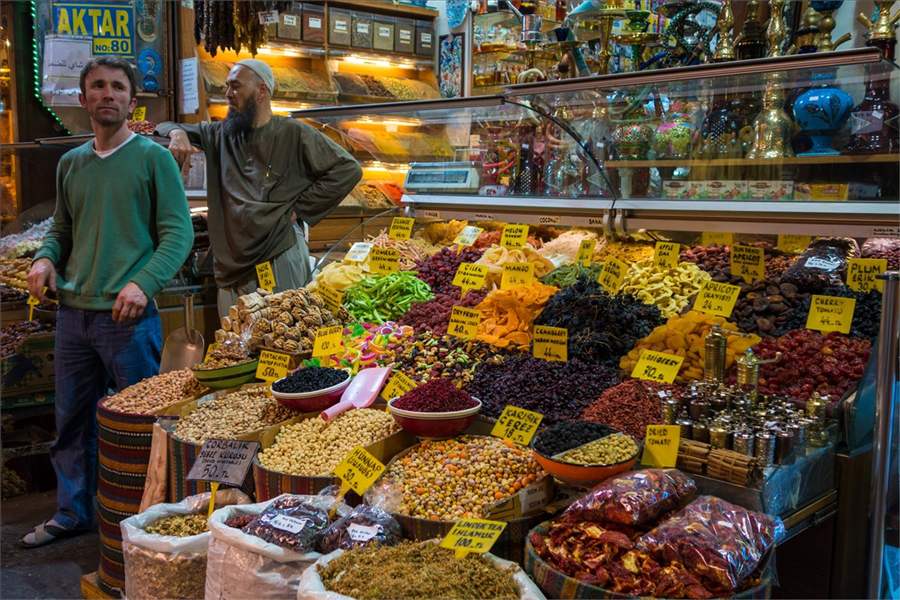
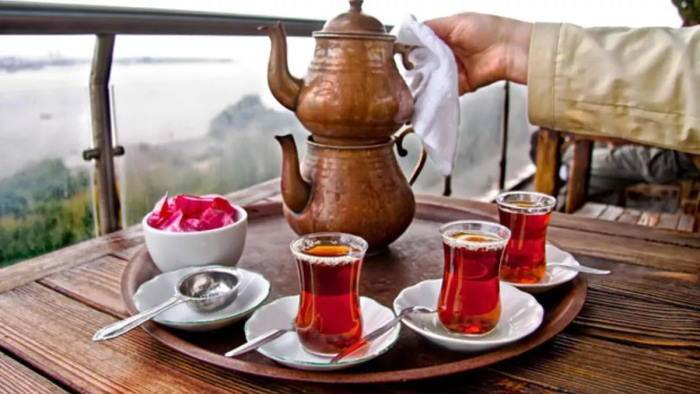
Sumac, pul biber (Aleppo pepper flakes), urfa biber, dried mint and Turkish oregano are all excellent and travel well. The apple tea in enormous colored tubs is almost always a sugar-and-flavouring powder rather than tea — fine if you know that is what you are buying. Real Turkish black tea from Rize is a much better souvenir.
Nuts, dried fruit and honey
Turkish pistachios, dried apricots from Malatya and figs are genuinely world-class. Comb honey is sold in slabs and is superb.
Turkish coffee
Just outside the bazaar's western corner is a coffee house that has been grinding and selling Turkish coffee since 1871. The queue is long and moves quickly, and a bag of freshly ground coffee is, to our mind, the single best-value thing you can carry home from Istanbul.
The streets behind the bazaar — where locals actually shop
Step out of the back of the Spice Bazaar and within thirty seconds the tone changes completely. This is Tahtakale, and it is where Istanbul does its real shopping: coffee roasters, cheesemongers, stalls of olives and pickles, hardware shops, coppersmiths, kitchen suppliers selling to restaurants. Prices drop sharply and the theater disappears.
Showing people that contrast — polished bazaar to working market, two minutes apart — is one of our favorite small moments on a tour, because it is the point at which visitors stop feeling like tourists and start feeling like they are in a real city.
Practical points
The Spice Bazaar is open daily, including Sundays, which makes it the obvious alternative when the Grand Bazaar is closed. It is busiest late morning to mid-afternoon. You will be offered samples constantly and the patter is part of the fun; a polite smile and "teşekkürler" is all that is needed if you would rather not stop. Prices are more negotiable than they look, especially by weight and especially for cash.
Where it fits on a private tour
The Spice Bazaar sits right beside the Galata Bridge and the ferry piers at Eminönü, which makes it a natural hinge in a day: markets in the morning, then a Bosphorus cruise from the pier a few steps away, or uphill to Süleymaniye Mosque and on to the Grand Bazaar. On a private tailor-made Istanbul tour we can build any of those combinations around what you actually want to taste and buy.
The Spice Bazaar — frequently asked questions
Is the Spice Bazaar open on Sunday?
Yes — unlike the Grand Bazaar, the Spice Bazaar trades daily including Sundays, which makes it the natural choice for a Sunday in Istanbul.
How do you spot real saffron in Istanbul?
Price is the giveaway. Genuine saffron is expensive everywhere because it is hand-picked stigmas; large cheap bags are safflower, a different product entirely. Buy small quantities from a shop that can tell you the origin.
What is the best Turkish delight to buy?
Ask for double-roasted pistachio lokum (çifte kavrulmuş fıstıklı) rather than the brightly colored tourist assortments. Any decent shop will offer you a taste first.
Is the Spice Bazaar cheaper than the Grand Bazaar?
For food, generally yes — and the streets immediately behind it, in Tahtakale, are cheaper still because that is where locals shop. The Grand Bazaar is the place for carpets, gold and ceramics rather than spices.
How long do you need at the Spice Bazaar?
Forty-five minutes inside the hall covers it. Add another half hour if you want to explore the working market streets behind it, which we would strongly recommend.
The Spice Bazaar in pictures
See it with a private local guide
Every tour we run is private and tailor-made — you choose the places, your licensed local guide plans the day with you, and a private car is always included.
Plan my private Istanbul tourTÜRSAB-licensed agency No. 15746 · skip-the-line entrance · no prepayment to enquire · a real person replies within 24 hours