- Is Topkapı Palace worth visiting?
- Yes — with the Harem, and with three hours set aside for it
- Built from
- 1459, by Mehmed the Conqueror
- Imperial residence for
- About 400 years, until Dolmabahçe took over in the 1850s
- Harem
- A separate ticket, and the part guests most regret skipping
- Closed
- Tuesdays
- Time needed
- 3 hours minimum; half a day if you like museums
Private tours from €150 per group, per day
Licensed local guide, private car and driver, and skip-the-line priority entrance. The day runs at your pace, and the plan stays yours to change.
Get my free quoteTÜRSAB-licensed agency No. 15746 · nothing to pay to ask · a real person replies within 24 hours
Yes — Topkapı Palace is worth visiting, and it is one of the very few sights we would not cut from a first Istanbul tour. The qualification matters, though: it is worth it if you buy the Harem ticket and allow three hours. Rushed in ninety minutes without the Harem, it is a lot of walking between pavilions and people come out puzzled about what the fuss was. Done properly, it is the single best explanation of how the Ottoman Empire actually worked.
Is Topkapı Palace worth visiting?
It depends on what you buy and how long you give it. This is the honest breakdown:
| What you do | Time | Verdict |
|---|---|---|
| Courtyards and gardens only | 1 hour | Pleasant, but you have seen a park with good gates |
| Main palace, no Harem | 2 hours | Good — Treasury and Sacred Relics — but you have missed the story |
| Main palace plus the Harem | 3 hours | The right visit. This is what to book |
| Everything, slowly, with the Bosphorus terrace | 4–5 hours | For museum people, and worth it if you are one |
If you only have one day in the city, our one-day Istanbul itinerary explains where Topkapı fits and what it displaces. On two days it is comfortable — see the two-day itinerary.
What is Topkapı Palace, and why does it matter?
Mehmed the Conqueror began building here soon after 1453, on the headland where three waterways meet, and for roughly four centuries this was the seat of the Ottoman state — not merely a royal residence but the government, the treasury, the school for the empire's administrators and the private household of the sultan, all inside one set of walls. The court moved out to Dolmabahçe in the 1850s, when European taste and European-style diplomacy demanded a European-looking palace.
That is why the two palaces are worth seeing as a pair rather than as duplicates. Topkapı is the empire at its own scale and on its own terms; Dolmabahçe is the empire dressing for someone else's party.
The four courtyards — four levels of access
The logic of Topkapı is a slow tightening of privilege, and once you understand it the whole place reads differently. It was designed as a sequence of courtyards, each admitting fewer people than the last.
The first courtyard was effectively public — a service yard with bakeries, a mint and the imperial guard. The second, entered through the Gate of Salutation with its two pointed towers, was the seat of government: this is where the Imperial Council, the Divan, met to run the empire. Famously, the sultan did not always sit with them — he could listen unseen from a grilled window set high in the wall above, and nobody in the room ever knew whether he was there.
The third courtyard, beyond the Gate of Felicity, was the sultan's private household — pages, the Treasury and the imperial library, a world ordinary subjects would never enter in their lifetimes. The fourth is not really a courtyard at all but a series of terraces and garden pavilions above the water, and it is where the visit finally opens out.
The Harem — and do you need a separate ticket?
Yes, the Harem is ticketed separately from the main palace, and yes, you should buy it. Visitors who skip it to save money are the ones who tell us afterwards it was the part they most wanted to see.
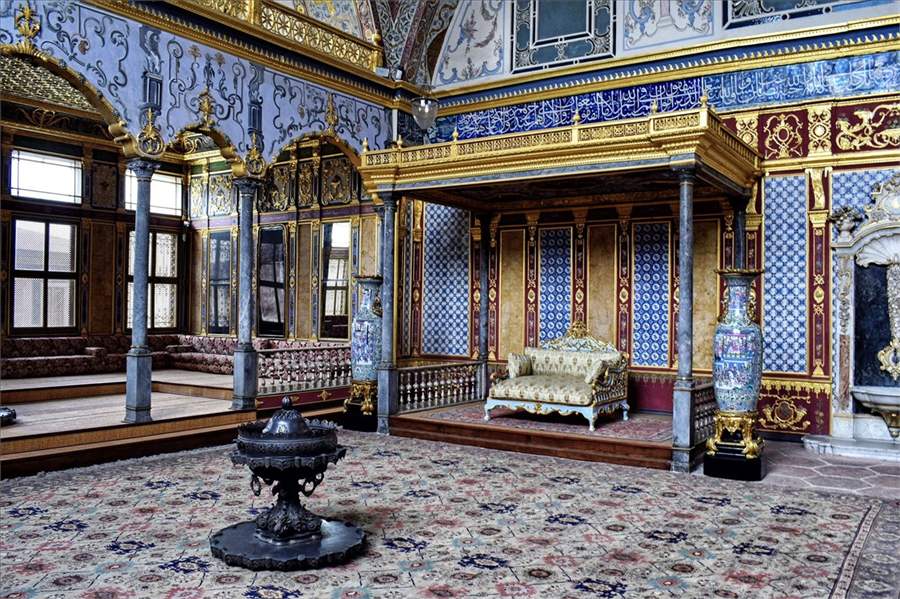
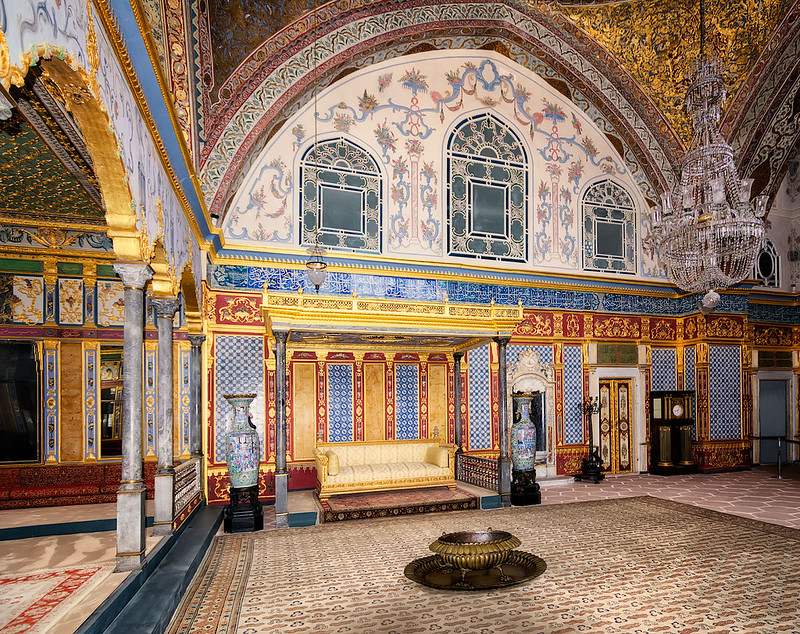
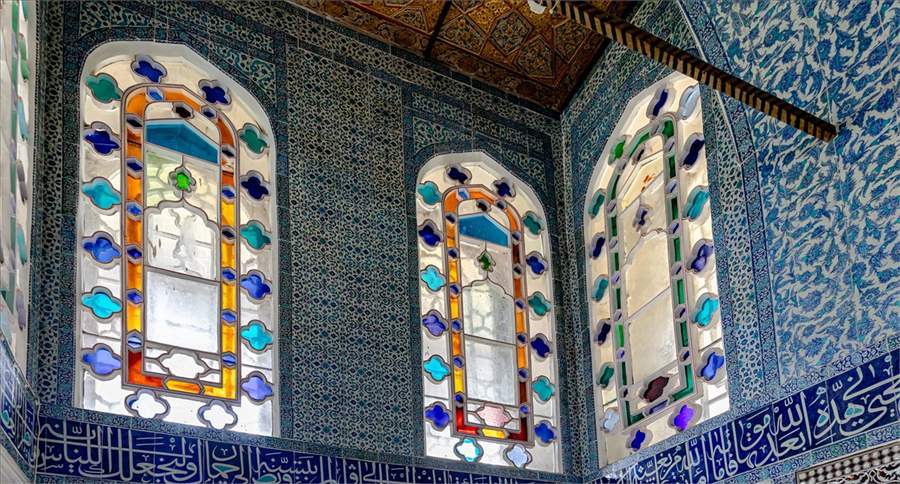
Forget the fantasy invented by nineteenth-century European painters. The Harem — the word simply means "forbidden" or "private" — was the family quarters: a dense, tiled, surprisingly domestic maze of some three hundred rooms where the sultan's mother, wives, children and their attendants lived, along with the eunuchs who guarded the complex.
The power structure is the interesting part. The Valide Sultan, the sultan's mother, was often the most influential person in the empire after the sultan himself, and for a stretch of the seventeenth century — the period Ottoman historians call the Sultanate of Women — arguably more powerful than him. Walking through her courtyard and then the sultan's own chambers, with their İznik tiles and gilded fireplaces, gives you a clearer sense of Ottoman politics than any museum caption.
The Treasury and the Sacred Relics
The Imperial Treasury holds objects that stop conversation mid-sentence. The Topkapı Dagger, made in the eighteenth century as a diplomatic gift, carries three enormous emeralds in its hilt. The Spoonmaker's Diamond is a pear-shaped stone of about eighty-six carats ringed by dozens of smaller diamonds — one of the largest cut diamonds on public display anywhere. There are jewelled thrones, ceremonial armour and gifts sent by rulers from across Asia and Europe.
The Chamber of the Sacred Relics is quieter and, for many visitors, more affecting. It holds objects of profound significance to Muslims, associated with the Prophet Muhammad and earlier prophets, and a reciter reads the Qur'an aloud without pause — a practice maintained here for centuries. Photography is not permitted and the atmosphere is genuinely reverent. It is a place to slow down.
Is Topkapı Palace free, and what do tickets cost?
It is not free. Topkapı is a ticketed state museum, the Harem is ticketed separately on top of that, and the Hagia Irene church in the first courtyard has at times required its own ticket as well. Prices are set by the Ministry of Culture and revised periodically, so we do not print a figure here — a stale price is worse than no price, and any number on a travel page dates within a season.
Ask us when you enquire and we will tell you the current arrangement. For our guests we buy the palace and Harem tickets in advance at the official rate and go in through the priority entrance, which in high season can save the better part of an hour at the security queue. The ticket cost is quoted separately from the tour price rather than hidden inside it.
How long do you need at Topkapı Palace?
Three hours is the realistic minimum for the courtyards, the Harem and the Treasury without rushing. Museum lovers can spend five and not feel they have padded it. The palace is big, largely outdoors and paved in uneven stone, so comfortable shoes matter here more than anywhere else in the old city, and shade is limited in the middle of a summer day.
Is there a dress code at Topkapı Palace?
The palace itself is a museum, not a place of worship, so there is no formal dress code — normal clothes are fine. Two things are worth knowing anyway. The Chamber of the Sacred Relics is a place of devotion for many visitors, and modest dress and quiet are simply courteous there. And if you are combining Topkapı with the Blue Mosque or Süleymaniye in the same day, which almost everyone does, mosque rules apply at those: shoulders and knees covered, a scarf for women, shoes off. Dressing for the mosques in the morning saves changing plans in the afternoon.
When to go — and the Tuesday you must avoid
Topkapı is closed on Tuesdays. This catches out a remarkable number of visitors every week, and it is worth building an entire Istanbul itinerary around that one fact — particularly since Dolmabahçe closes on Mondays and the Grand Bazaar on Sundays, so a short trip can very easily collide with all three.
Otherwise, arrive at opening. The palace fills from the gate inwards through the morning, so an early start is worth more here than at almost any other sight in the city. Spring and autumn are kindest — see the best time to visit Istanbul for what each season is like.
The view most people forget to look at
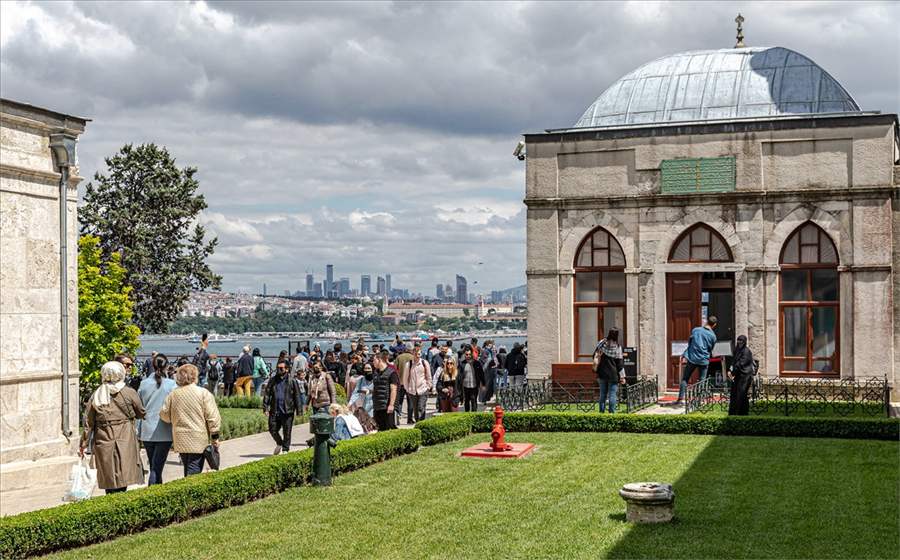
Walk out to the marble terrace beyond the Baghdad Kiosk in the fourth courtyard. From here you see exactly why Mehmed II chose this hilltop: ships turning up the Bosphorus, the Asian shore opposite, the mouth of the Golden Horn below and Galata Tower on its hill beyond. The sultans were not only living above their capital, they were watching the sea traffic that made them rich. On a clear afternoon it is one of the best views in Istanbul, and it costs nothing once you are inside.
How to visit Topkapı Palace without wasting the day
Two bottlenecks dominate: the security queue at the entrance and the Harem, where a single narrow route means everybody bunches. Our strong preference is to arrive early, go straight to the Harem first while the crowd is still working through the second courtyard, then come back out and do the Treasury and the pavilions in reverse order to everyone else. It sounds like a small thing. In practice it saves an hour of standing still.
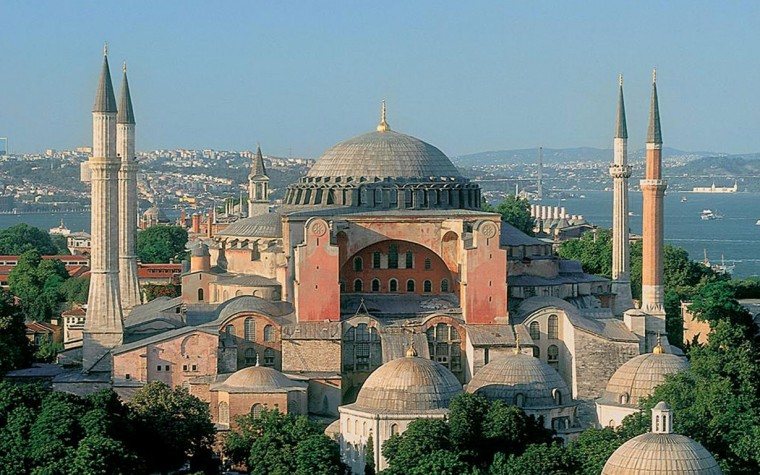
Topkapı sits about five minutes' walk from Hagia Sophia, so the two combine naturally, and the Hippodrome is on the way between them. We would not usually add the Grand Bazaar to the same day unless you are energetic — that is a full afternoon of its own. The whole cluster is covered in our Sultanahmet old city guide.
On a private day we handle the tickets, choose the route, and keep the pace comfortable rather than forced — see the full list of tours, or the Best of Istanbul day, which is built around exactly this sequence. From €150 per group per day, guide and private vehicle included, tickets quoted separately. Tell us your dates and we will make sure none of them is a Tuesday.
Topkapı Palace — frequently asked questions
Is Topkapı Palace worth visiting?
Yes, provided you buy the Harem ticket and allow three hours. Rushed in ninety minutes without the Harem it is a lot of walking between pavilions; done properly it is the clearest explanation in Istanbul of how the Ottoman Empire was actually run.
Is Topkapı Palace free, and do you need tickets?
It is not free — it is a ticketed state museum, and the Harem needs a second ticket on top of the palace one. Prices are set by the Ministry of Culture and revised periodically, so ask us for the current figure rather than trusting a number printed on a travel page. We buy both in advance for our guests, at the official price, quoted separately from the tour.
Do you need a separate ticket for the Harem at Topkapı?
Yes, the Harem is ticketed separately from the main palace, and it is the part visitors who skip it most often regret. We buy both in advance so there is no second queue inside on the day.
How long do you need at Topkapı Palace?
Three hours is a realistic minimum for the courtyards, the Harem and the Treasury without rushing. Allow four or five if you enjoy museums. It is a large, largely open-air site with a lot of walking on uneven stone.
Is there a dress code at Topkapı Palace?
No formal dress code — the palace is a museum, not a place of worship. Modest dress is courteous in the Chamber of the Sacred Relics, and if you are visiting the Blue Mosque or Süleymaniye the same day, mosque rules apply there: shoulders and knees covered, a scarf for women, shoes off.
Which day is Topkapı Palace closed?
Tuesdays. It is the most common scheduling mistake visitors to Istanbul make. Dolmabahçe closes on Mondays and the Grand Bazaar on Sundays, so a short trip needs sequencing rather than luck.
Topkapı Palace in pictures


See it with a private local guide
Every tour we run is private and tailor-made — you choose the places, your licensed local guide plans the day with you, and a private car is always included.
Plan my private Istanbul tourTÜRSAB-licensed agency No. 15746 · skip-the-line entrance · no prepayment to enquire · a real person replies within 24 hours