- Opening hours
- 09:00–19:00 daily, closed Sundays and public holidays
- Entry
- Free — it is a market, not a ticketed sight
- Founded
- 1455–1461, under Mehmed the Conqueror
- Size
- About 4,000 shops on around 60 streets, with 22 gates
- Best for
- Gold, carpets and kilims, ceramics, leather, lamps, textiles
- Getting there
- Tram T1 to Beyazıt-Kapalıçarşı, a few minutes from Sultanahmet
Private tours from €150 per group, per day
Licensed local guide, private car and driver, and skip-the-line priority entrance. The day runs at your pace, and the plan stays yours to change.
Get my free quoteTÜRSAB-licensed agency No. 15746 · nothing to pay to ask · a real person replies within 24 hours
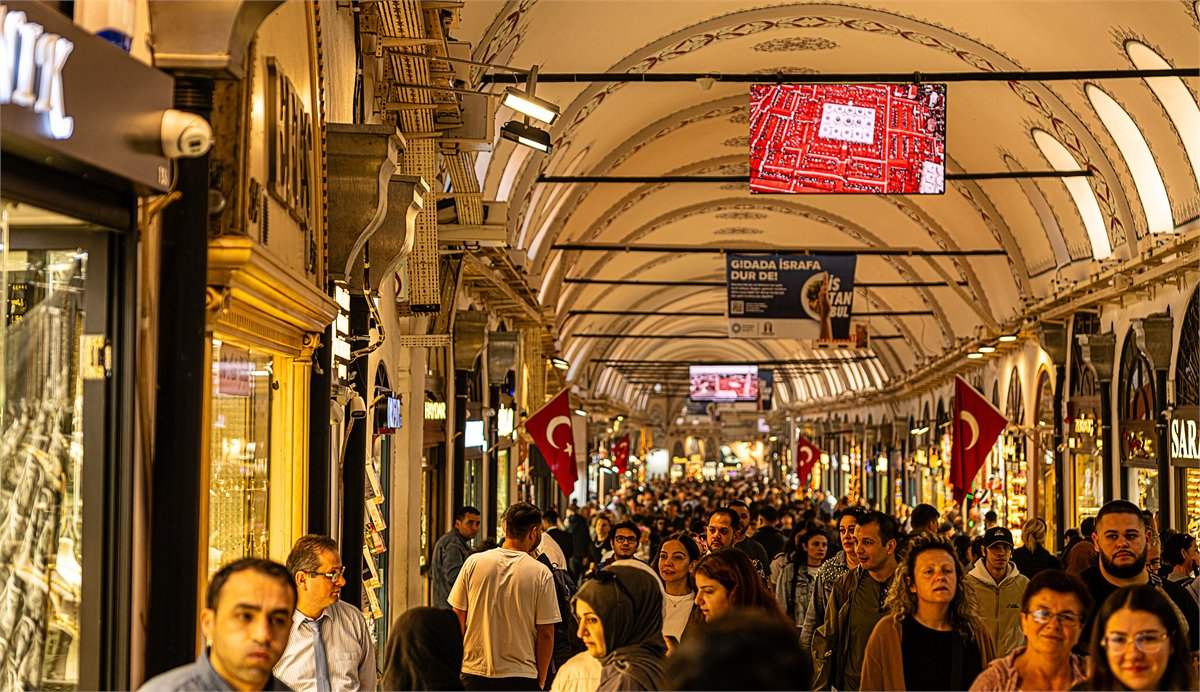
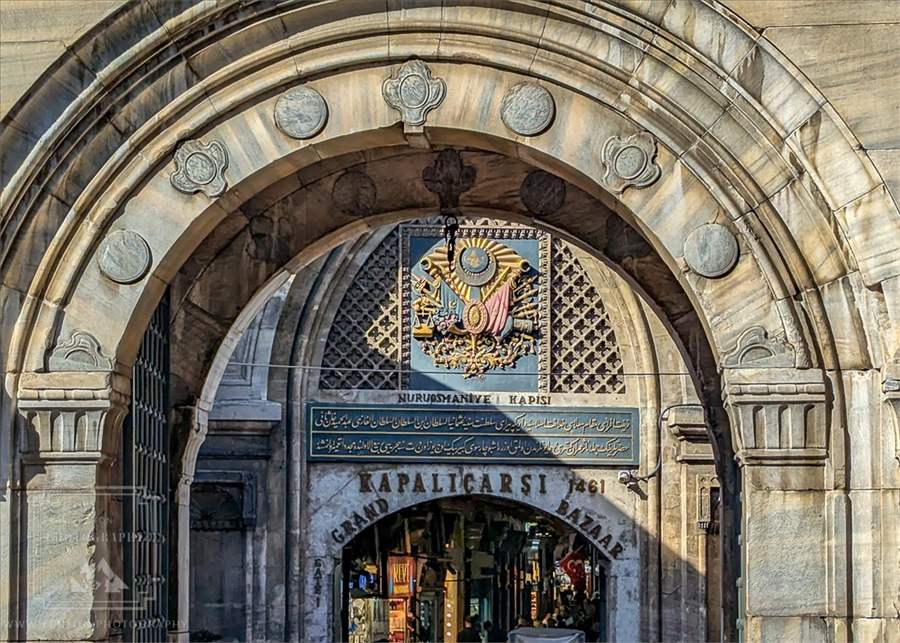
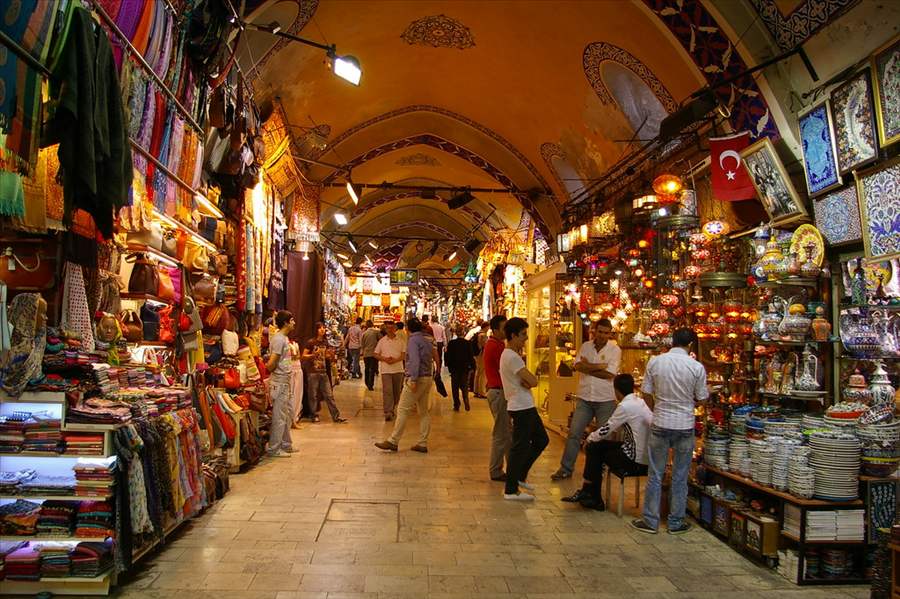
The Grand Bazaar in Istanbul opens daily from 09:00 to 19:00 and is closed on Sundays and public holidays. It is the world's oldest covered market — some 4,000 shops down about sixty vaulted streets behind twenty-two gates, trading almost continuously since the 1460s. It is not really a market so much as a roofed town, with its own police post, its own mosques and its own rules, and it rewards an hour of getting deliberately lost in it.
What is the Grand Bazaar in Istanbul?
It started as a strongbox. Mehmed II built the Inner Bedesten, a fortified stone hall with heavy doors where the most valuable goods — jewels, precious metals, rare textiles — were locked away each night. Trade gathered around it, then spread street by street, and the whole thing was gradually roofed over.
The street names still record what happened where: the quilt-makers, the skullcap-makers, the mirror-makers, the fez-makers, the gold-sellers. Fires and earthquakes flattened parts of the bazaar repeatedly across five centuries, and it was always rebuilt, because far too much of the city's money moved through it to allow otherwise.
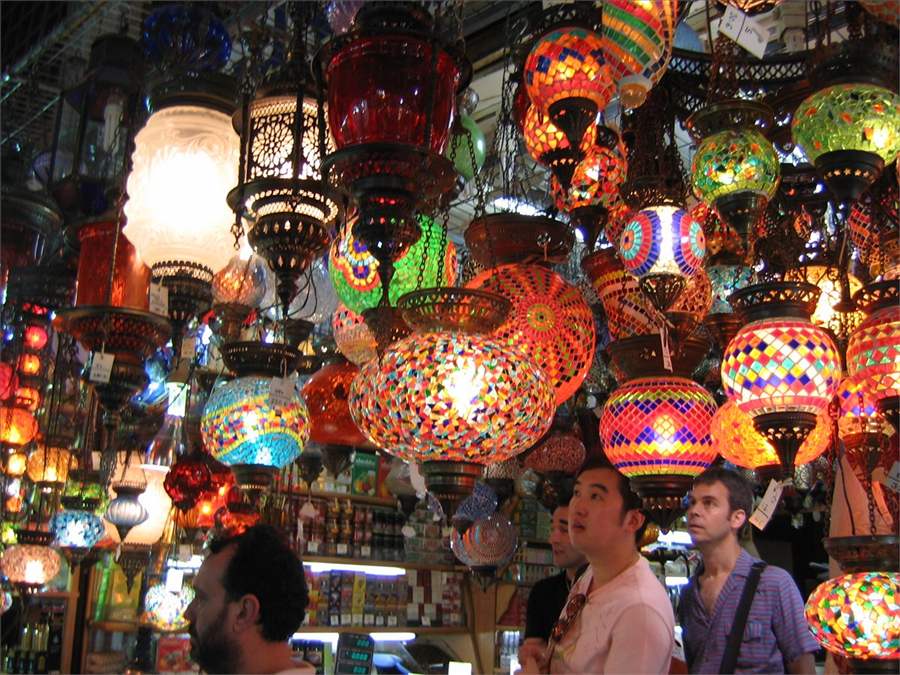
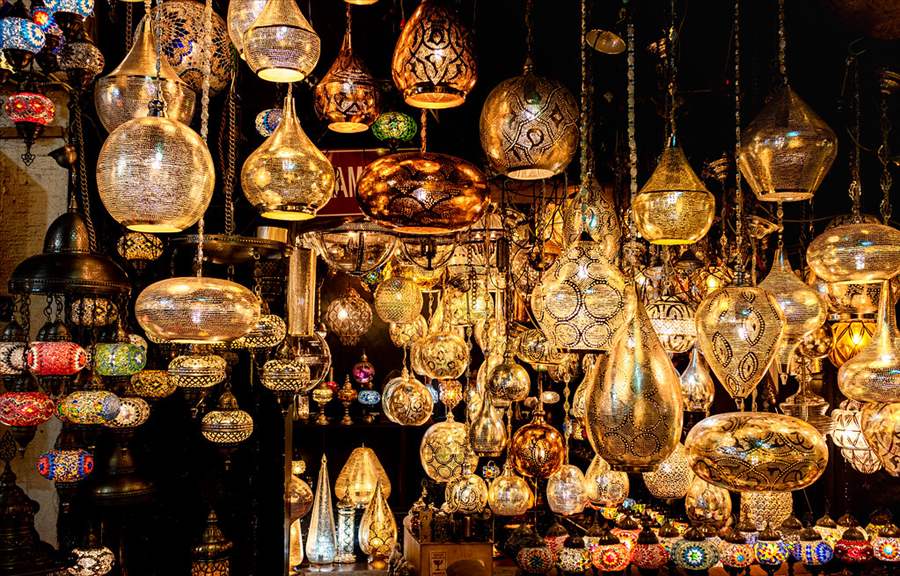
Visitors are consistently surprised by how ordered it is beneath the apparent chaos. Turn one corner and you are among nothing but gold, glowing in near-identical windows; turn another and it is all carpets, or leather, or colored glass lamps throwing patterns across the vaults. The disorientation is geometry, not confusion — the streets are not straight, the roof hides the sun, and all twenty-two gates look equally plausible. Agree a meeting point before anyone wanders off.
What are the Grand Bazaar's opening hours?
| Day | Hours |
|---|---|
| Monday – Saturday | 09:00 – 19:00 |
| Sunday | Closed |
| Public and religious holidays | Closed |
Go early if you can — it fills up from around midday, and the light through the roof vents is better for photographs before the crowds arrive. If Sunday is the only day you have free, head to the Spice Bazaar instead, which trades every day of the week.
Is the Grand Bazaar worth visiting?
Yes, even if you buy nothing. Parts of it are aimed squarely at visitors and parts of it are the real thing — Istanbullus still buy their gold here — and the difference is not obvious from the shopfront, which is the honest argument for going in with someone local the first time. Come for the building as much as the shopping: five hundred years of vaulted stone, and a working town rather than a museum piece.
How much does it cost to enter the Grand Bazaar?
Nothing. Unlike Topkapı Palace or the Basilica Cistern, the Grand Bazaar is not a ticketed monument — it is a functioning market, and walking in and out costs you exactly nothing. What you spend is entirely up to what you decide to buy, and that is where bargaining comes in.
What should you buy in the Grand Bazaar?
- Carpets and kilims — the most famous product, and the one that most rewards knowing what you are doing. Genuine hand-knotted wool and silk pieces are real investments; machine-made ones are not, and the difference is not obvious to an untrained eye. Ask to see the back of any carpet — knot density and clarity of pattern from behind tell you a great deal.
- Gold and jewelry — sold by weight against the daily rate plus workmanship, so the price should always be explicable. If a seller cannot explain how a figure was reached, walk on.
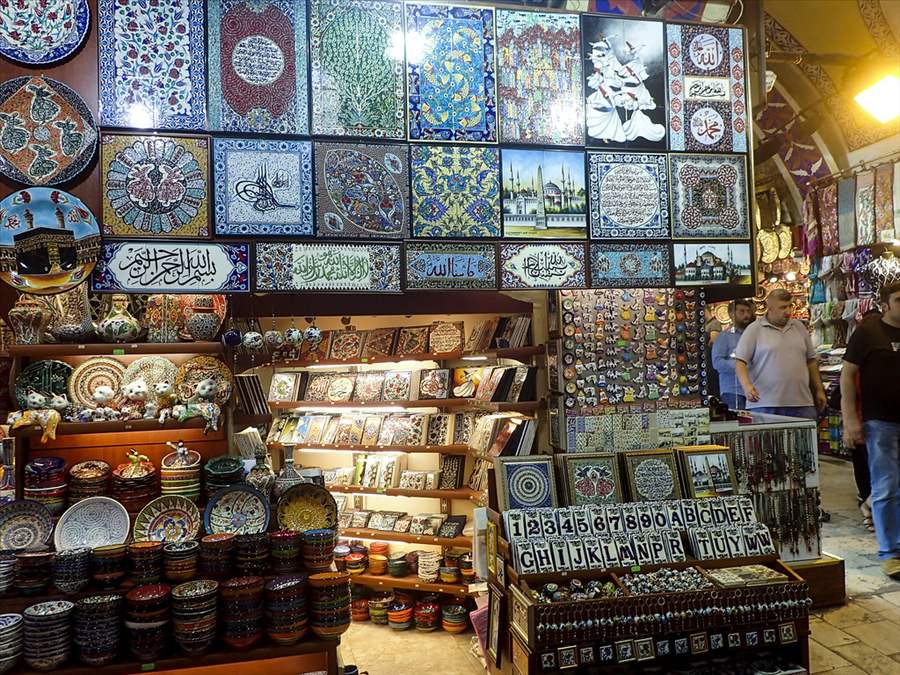
- Ceramics and İznik-style tiles — hand-painted Kütahya ware is the realistic middle ground; genuine hand-made İznik reproductions are expensive for good reason, and printed transfers dressed up as hand-painted are extremely common.
- Lamps, leather, textiles and copper — mosaic glass lamps are the signature souvenir and vary hugely in quality; Turkish towels (peştemal) are light and genuinely good; old copper and brass can be excellent.
How do you bargain in the Grand Bazaar?
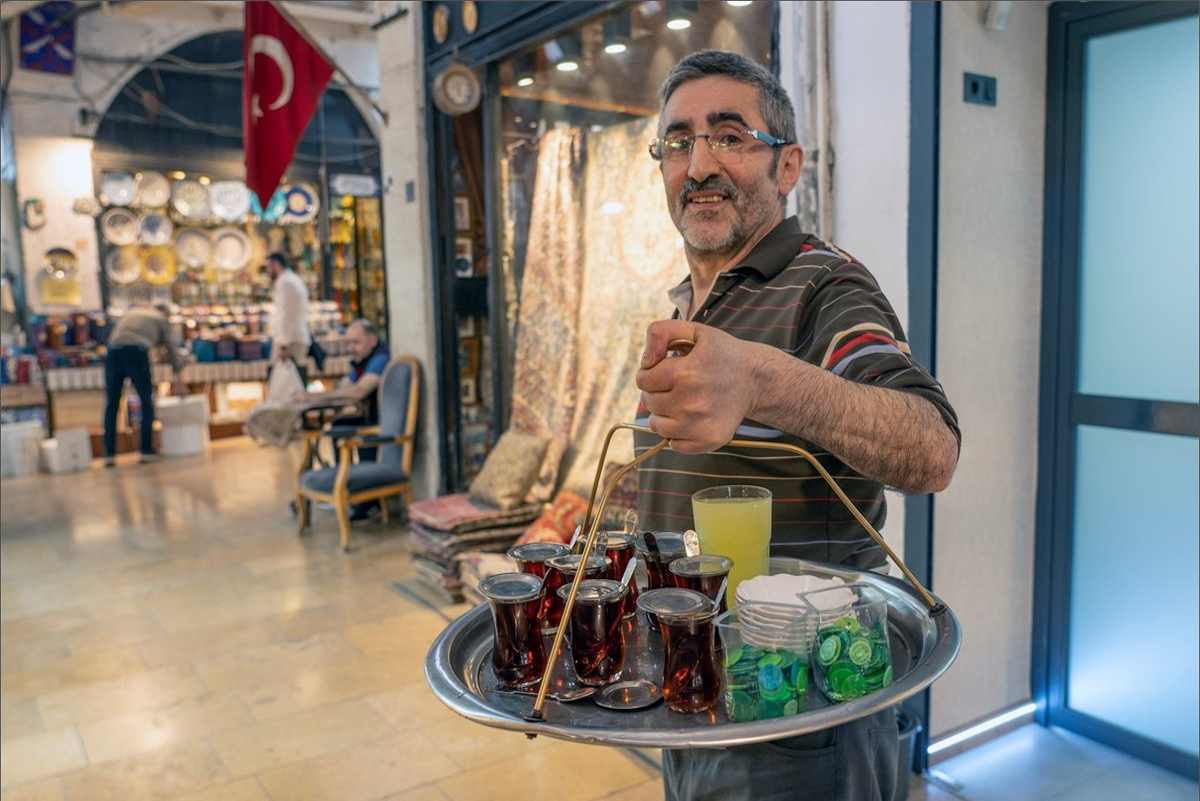
Bargaining is expected, and it is meant to be enjoyable rather than adversarial. Be pleasant — this is a social transaction, and warmth moves the price more than aggression does. Have a figure in mind before you start, and be genuinely willing to walk away, politely; that is a normal part of the dance, not an insult. You will be offered tea; accepting it obliges you to nothing, and refusing is the mild discourtesy, not accepting. Be wary of "special price, just for you", and of anyone who tells you a shop is closing down — if a deal seems remarkable, it usually is, for the seller.
Grand Bazaar vs Spice Bazaar — which should you visit?
Different trips, and ideally both. The Grand Bazaar is bigger, covers carpets, gold, ceramics and leather, and is closed Sundays. The Spice Bazaar is smaller, food-focused — spices, Turkish delight, nuts and coffee — open every day, and a fifteen-minute walk downhill from here. If you only have time for one and you like to eat, take the Spice Bazaar; if you want the full five-century experience, this is it. Our Istanbul shopping guide covers both plus the districts locals actually shop in.
How do you get to the Grand Bazaar?
The easiest route from Sultanahmet or Sirkeci is the T1 tram to the Beyazıt-Kapalıçarşı stop, right outside one of the main gates. On foot it is about fifteen minutes uphill from Hagia Sophia and the Hippodrome, past Süleymaniye Mosque if you take the scenic route. Pickpocketing is rare but the crowds are dense, so keep bags in front of you, and most shops take cards — though cash still gives you more leverage on price.
Touring the Grand Bazaar with a local guide
This is the place in Istanbul where a guide most directly saves you money. Ours will tell you honestly what a fair price looks like for a given carpet, which workshops actually make what they sell, and which streets are worth your time — with no pressure to buy anything at all. It fits naturally into our Best of Istanbul day or any one-day itinerary, alongside the Spice Bazaar and Süleymaniye. Guide and private car included, at an unhurried pace, from €150 per group per day — tell us you'd like to shop well and we will build the day around it.
The Grand Bazaar — frequently asked questions
What are the Grand Bazaar's opening hours?
09:00 to 19:00, Monday to Saturday. It is closed on Sundays and on public and religious holidays.
Is the Grand Bazaar open on Sunday?
No — the Grand Bazaar is closed on Sundays and on public holidays. If Sunday is your only free day, the Spice Bazaar and the surrounding street markets are the better option.
Is the Grand Bazaar worth visiting?
Yes, even if you do not buy anything. It is worth seeing simply as a building — five hundred years of vaulted stone — and parts of it are still where Istanbullus genuinely shop, not just where visitors do.
How do you bargain in the Grand Bazaar?
Stay friendly, decide your price in advance, and be genuinely willing to walk away — it is part of the process, not an insult. Accept the tea you are offered; it obliges you to nothing. Cash usually buys a better price than a card.
What should I buy in the Grand Bazaar?
Carpets and kilims, gold, hand-painted ceramics, mosaic lamps, Turkish towels and copperware are the classics. Quality varies enormously in every category, which is exactly where a local guide earns their fee.
How do I get to the Grand Bazaar?
Take the T1 tram to Beyazıt-Kapalıçarşı, right outside one of the main gates, or walk about fifteen minutes uphill from Hagia Sophia and the Hippodrome.
The Grand Bazaar in pictures

See it with a private local guide
Every tour we run is private and tailor-made — you choose the places, your licensed local guide plans the day with you, and a private car is always included.
Plan my private Istanbul tourTÜRSAB-licensed agency No. 15746 · skip-the-line entrance · no prepayment to enquire · a real person replies within 24 hours