- Built
- 1609–1616, for Sultan Ahmed I
- Architect
- Sedefkâr Mehmed Ağa, a student of the great Sinan
- Famous for
- Around 20,000 hand-made İznik tiles and six minarets
- Entry
- Free — it is an active mosque, not a museum
- Dress code
- Shoulders and knees covered, hair covered for women, shoes off
- Time needed
- 30–45 minutes
Private tours from €150 per group, per day
Licensed local guide, private car and driver, and skip-the-line priority entrance. The day runs at your pace, and the plan stays yours to change.
Get my free quoteTÜRSAB-licensed agency No. 15746 · nothing to pay to ask · a real person replies within 24 hours
Why it is called the Blue Mosque
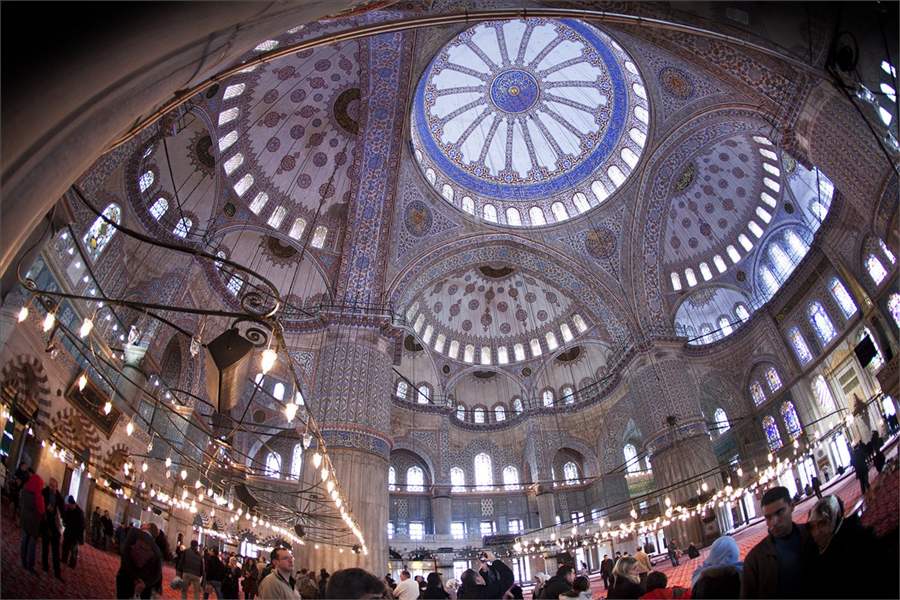
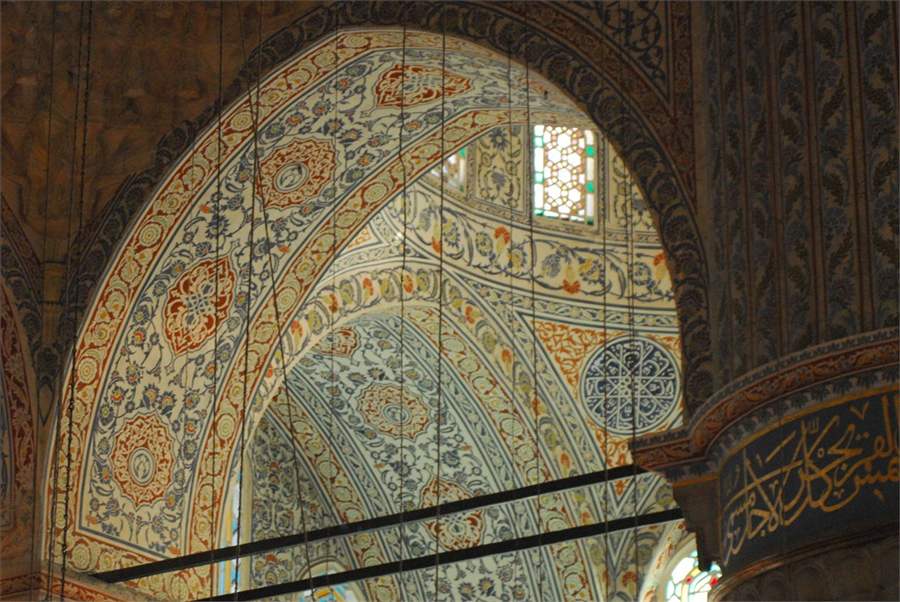
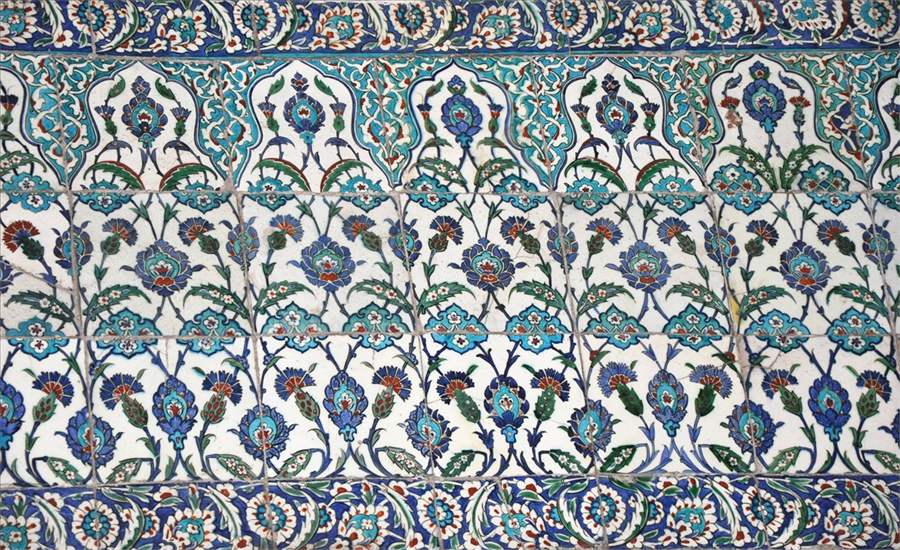
Nobody officially named it that. The building is the Sultan Ahmed Mosque — Sultanahmet Camii — and the whole surrounding district takes its name from it. The nickname comes from the interior: somewhere in the region of twenty thousand hand-painted ceramic tiles line the lower walls and the galleries, made in the kilns of İznik, and their dominant blues and greens give the whole room a cool underwater cast on a bright day.
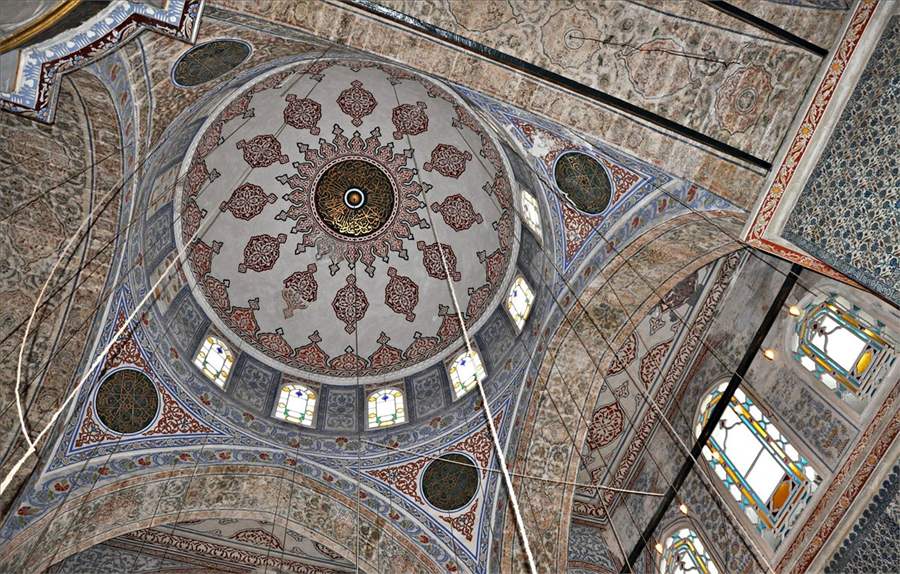
The tiles repay slow looking. İznik ware was at its technical peak in the sixteenth century, and the designs here run through tulips, carnations, cypresses, roses and abstract arabesques, no two panels quite alike. Above them the walls turn to painted plaster and then to the domes, and two hundred and sixty windows pour light down through the whole cascade.
A young sultan and a very ambitious building
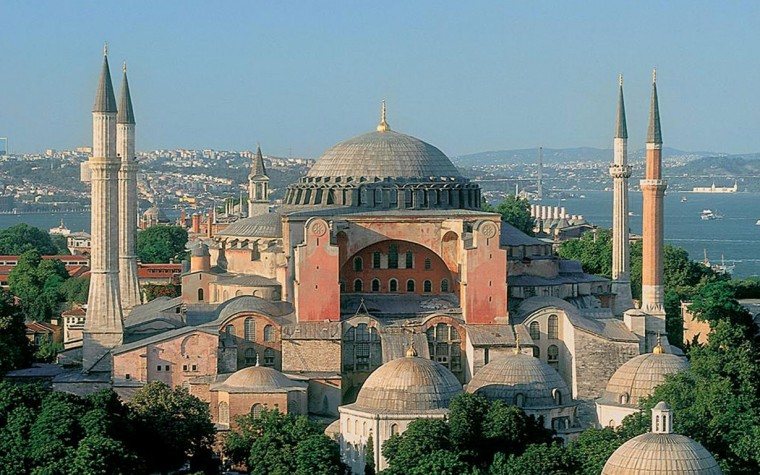
Ahmed I began the mosque at nineteen years old. He chose to build it directly facing Hagia Sophia — an unmistakable statement, placing his new imperial mosque in open conversation with the greatest building of the Christian empire the Ottomans had replaced. The two now sit at either end of a garden, domes answering each other, which is one of the great architectural face-offs anywhere.
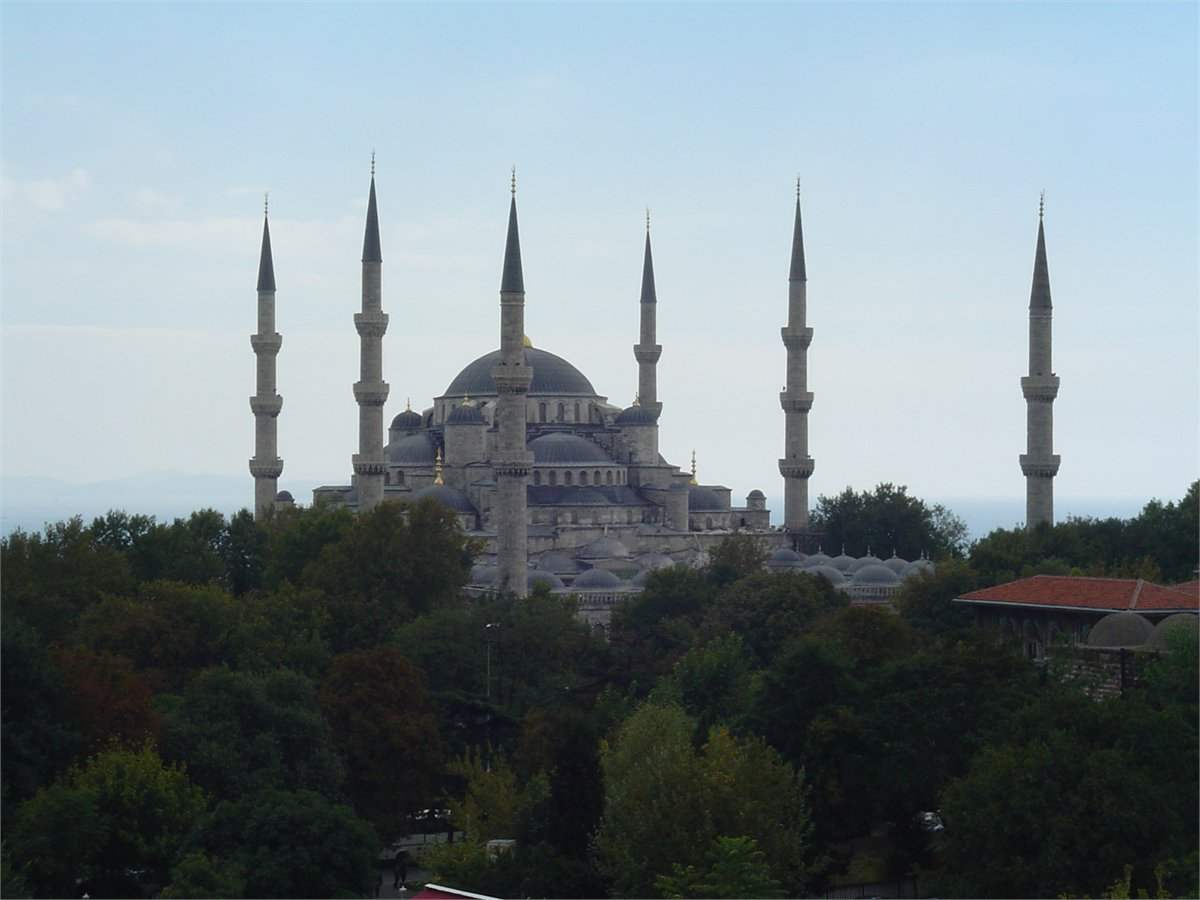
His architect, Sedefkâr Mehmed Ağa, had trained under Mimar Sinan, the towering figure of Ottoman architecture. The building shows the inheritance clearly: rather than one dome dropped onto a box, the structure climbs in a deliberate cascade — small domes to half-domes to the great central dome — so that from outside it appears to swell upward rather than simply stand.
The scandal of the six minarets
The Blue Mosque has six minarets, and at the time only the Great Mosque in Mecca had six. The story told in Istanbul is that this caused genuine offence, and that the problem was solved by funding a seventh minaret at Mecca. Historians argue about the details — one version has it that the sultan asked for gold minarets, altın, and the architect heard six, altı — but the six slim towers are now among the most recognisable silhouettes in the world, and the story gets told on every tour in the city, including ours.
Visiting the Blue Mosque: the practical part
The entrance most visitors get wrong
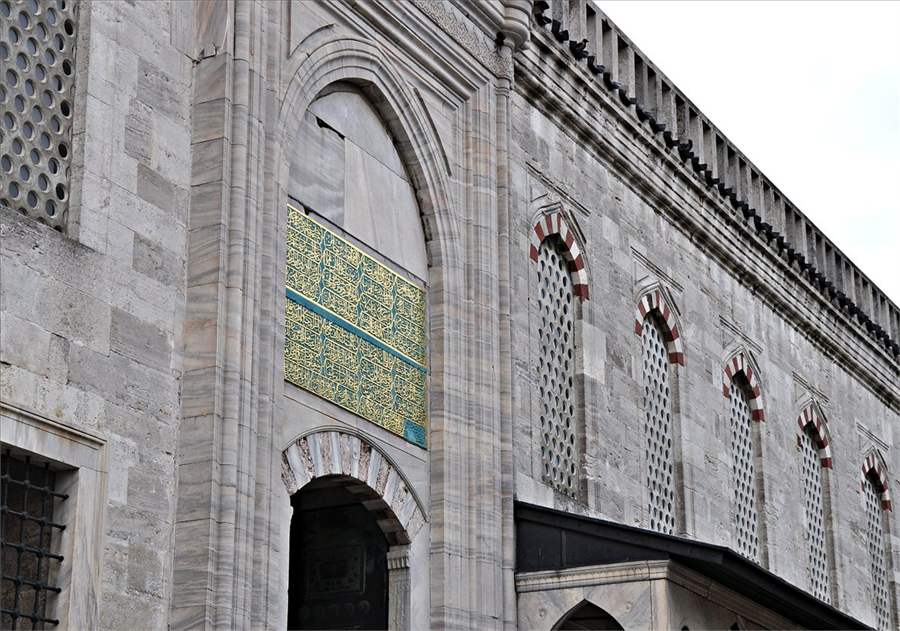
This is the single most useful thing on this page. The grand courtyard gate that everybody photographs is not the visitor entrance. Tourists enter from the south side of the building, and knowing that saves you a hot walk around the perimeter and a queue in the wrong place. Worshippers use a separate door.
Opening times and prayer
Entry is free, because this is a living mosque and not a ticketed monument. It closes to visitors during each of the five daily prayers and for a longer window around midday on Friday. Prayer times shift through the year with the sun, which is why arriving on spec is a gamble and why we always build the day around the current schedule.
Dress code
Shoulders and knees covered for everyone; women cover their hair. Coverings are handed out free at the entrance, though your own light scarf is more comfortable. Shoes come off and go into a bag you carry with you — wear something that slips off easily and socks you do not mind walking in. Our full guide to what to wear in Istanbul covers the same rules at every other mosque in the city, and what they mean for the rest of your day.
How long you need
Half an hour to forty-five minutes is plenty for the interior. It is not a large building to walk around; it is a building to stand still in and look up.
What to look for inside
Find the mihrab, the niche in the wall indicating the direction of Mecca — it is carved marble and holds a fragment of the Kaaba's black stone. Beside it the minbar, the stepped pulpit, is used for the Friday sermon. Look up at the great chandeliers hanging low over the floor; in Ottoman times these carried oil lamps, and ostrich eggs were sometimes hung among them, believed to repel spiders and therefore cobwebs. Then look at the carpet, which is vast, red and renewed periodically — one reason the room feels warmer and softer than the cool marble of Hagia Sophia across the garden.
Blue Mosque or Hagia Sophia — which is better?
It is the question we are asked most, and the honest answer is that they do different things. Hagia Sophia overwhelms you with age, scale and the strangeness of a building that has been two religions. The Blue Mosque is more beautiful in a conventional sense — more harmonious, more decorative, more obviously designed to be lovely. Seeing them within an hour of each other, which is easy since they are two minutes apart, is one of the best things about a day in Sultanahmet.
Seeing the Blue Mosque on a private Istanbul tour
Because entry is free and the building is small to walk, the value of a guide here is timing and context: getting you to the right door at a moment when the mosque is open, explaining what is happening if a prayer is under way, reading the tile work, and framing why this building was placed exactly where it was. On a private tailor-made tour the Blue Mosque usually sits alongside Hagia Sophia, the Hippodrome and the Basilica Cistern — all four are within a five-minute walk of one another.
The Blue Mosque — frequently asked questions
Is the Blue Mosque free to enter?
Yes. It is an active mosque rather than a museum, so there is no entrance ticket. It does close to visitors during the five daily prayers and for longer around midday on Friday.
What should I wear to the Blue Mosque?
Cover shoulders and knees; women should cover their hair. Free coverings are provided at the entrance, but your own scarf is more comfortable. Shoes are removed at the door, so slip-on shoes and socks make life easier.
Where is the tourist entrance to the Blue Mosque?
Not at the famous courtyard gate — visitors enter from the south side of the mosque. It is one of the most common mistakes people make and it costs them a long walk around the building in the sun.
Why does the Blue Mosque have six minarets?
Six was unusual because the Great Mosque in Mecca had six at the time. Istanbul tradition says the resulting offence was resolved by paying for a seventh minaret at Mecca; another version blames a misheard instruction, gold (altın) versus six (altı). Either way the six minarets are now one of the city's defining silhouettes.
How long does a visit to the Blue Mosque take?
Thirty to forty-five minutes inside is usually enough. Combined with Hagia Sophia, the Hippodrome and the Basilica Cistern, the whole of central Sultanahmet fills a comfortable morning.
The Blue Mosque in pictures

See it with a private local guide
Every tour we run is private and tailor-made — you choose the places, your licensed local guide plans the day with you, and a private car is always included.
Plan my private Istanbul tourTÜRSAB-licensed agency No. 15746 · skip-the-line entrance · no prepayment to enquire · a real person replies within 24 hours