- Building
- Largely 11th–12th century; the art dates from about 1315–1321
- Patron
- Theodore Metochites, statesman and scholar
- Do not miss
- The Anastasis fresco in the side chapel
- Location
- Edirnekapı, near the old city walls — a ride from Sultanahmet
- Status
- Reconverted to a mosque in 2020; reopened after restoration in 2024
- Time needed
- 60–90 minutes
Private tours from €150 per group, per day
Licensed local guide, private car and driver, and skip-the-line priority entrance. The day runs at your pace, and the plan stays yours to change.
Get my free quoteTÜRSAB-licensed agency No. 15746 · nothing to pay to ask · a real person replies within 24 hours
Why the Chora matters
Byzantine art has a reputation for being stiff, golden and remote. The Chora is where that reputation collapses. The mosaics and frescoes made here in the early fourteenth century — during the last cultural flowering of the empire, the so-called Palaiologan Renaissance — are full of movement, depth, individual faces and genuine emotion. Figures lean, cloth falls convincingly, buildings recede into space. It is a century before Giotto is usually credited with doing something similar in Italy.
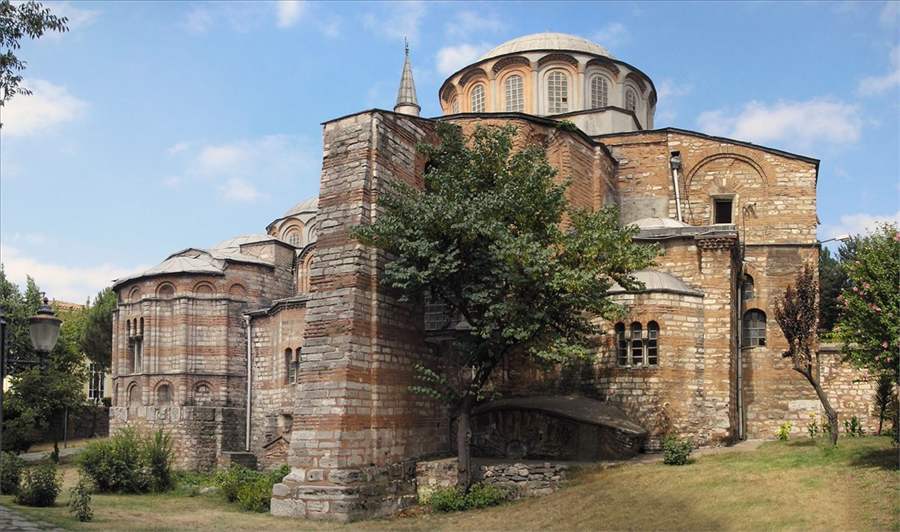
The name means "in the country" — the original church stood outside the walls of Constantinople before Theodosius extended them. The building you see is largely eleventh and twelfth century, but its glory came around 1315 to 1321, when Theodore Metochites, a scholar, poet, astronomer and the most powerful bureaucrat in the empire, paid to have it decorated. He is shown above the door into the nave, wearing an enormous striped turban, presenting a model of the church to Christ.
What to look for
The Anastasis
In the parekklesion, the funerary side chapel, the half-dome of the apse holds the single greatest image in Byzantine art. Christ, in blazing white, stands on the shattered gates of Hell and hauls Adam and Eve bodily out of their tombs by the wrists. Their arms are limp; he is doing all the work. Broken locks and keys scatter in the darkness beneath his feet. It is the Harrowing of Hell, and it has more physical force than almost anything else painted before the Renaissance.
The Christ Pantokrator
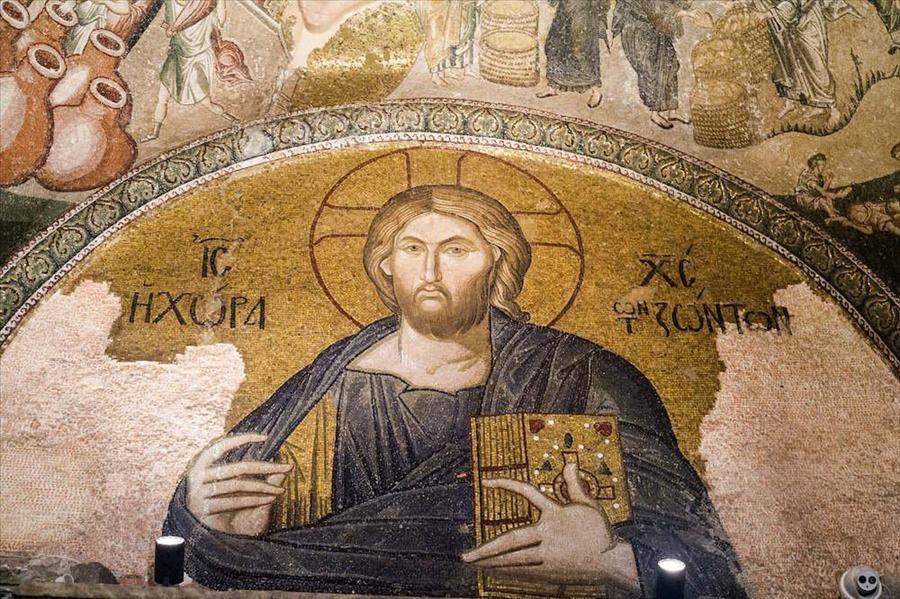
Above the entrance, Christ is titled Ἡ Χώρα τῶν ζώντων — "the Land of the Living" — a pun on the church's name. The corresponding image of the Virgin nearby is titled "the Container of the Uncontainable". Whoever devised this scheme was showing off, and it works.
The narrative cycles
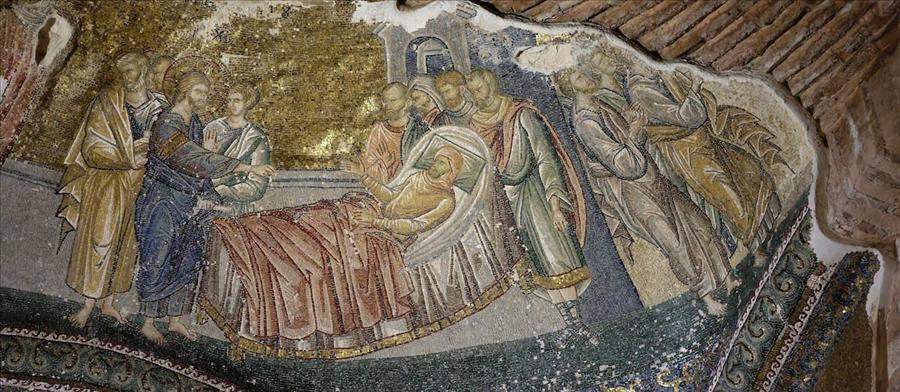
The two narthexes carry a cycle of the life of the Virgin and the infancy and ministry of Christ, including scenes you will not find elsewhere — drawn partly from apocryphal texts. Look for the Healing of Peter's mother-in-law, the enrolment for taxation before Quirinius, and the extraordinary Dormition of the Virgin on the west wall of the nave.
History, and its current status
The church became the Kariye Mosque around 1511, and the mosaics were plastered over — which, as at Hagia Sophia, is exactly why they survived. From 1948 the Byzantine Institute of America uncovered and conserved them, and the building operated as a museum for decades.
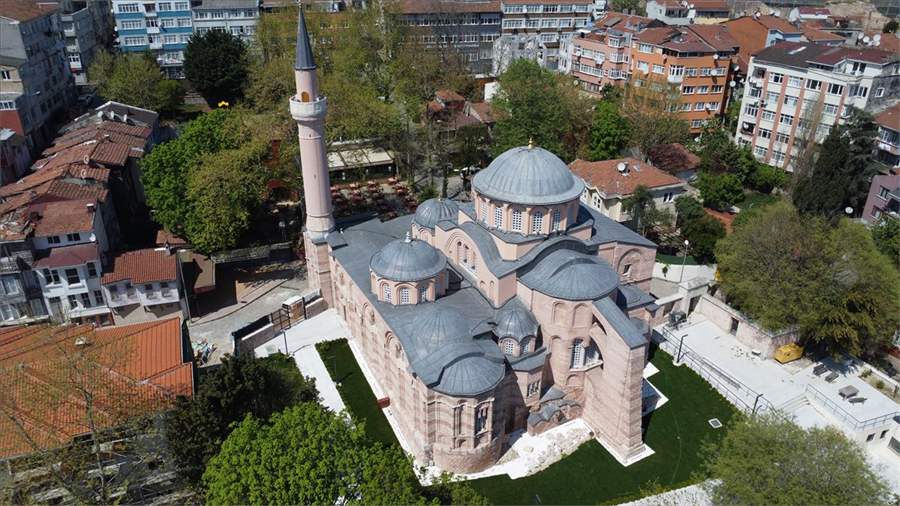
In 2020 it was reconverted to a mosque, and after an extended restoration it reopened in 2024. Arrangements for visitors — hours, ticketing, which areas are open and how the mosaics are curtained during prayer — have changed more than once, so we check the current position before every tour rather than printing something here that will age badly.
Getting there and combining it
The Chora sits in Edirnekapı, up by the Theodosian land walls, well away from Sultanahmet — roughly twenty to thirty minutes by car depending on traffic. That distance is the entire reason most visitors miss it, and the entire reason it is never crowded.
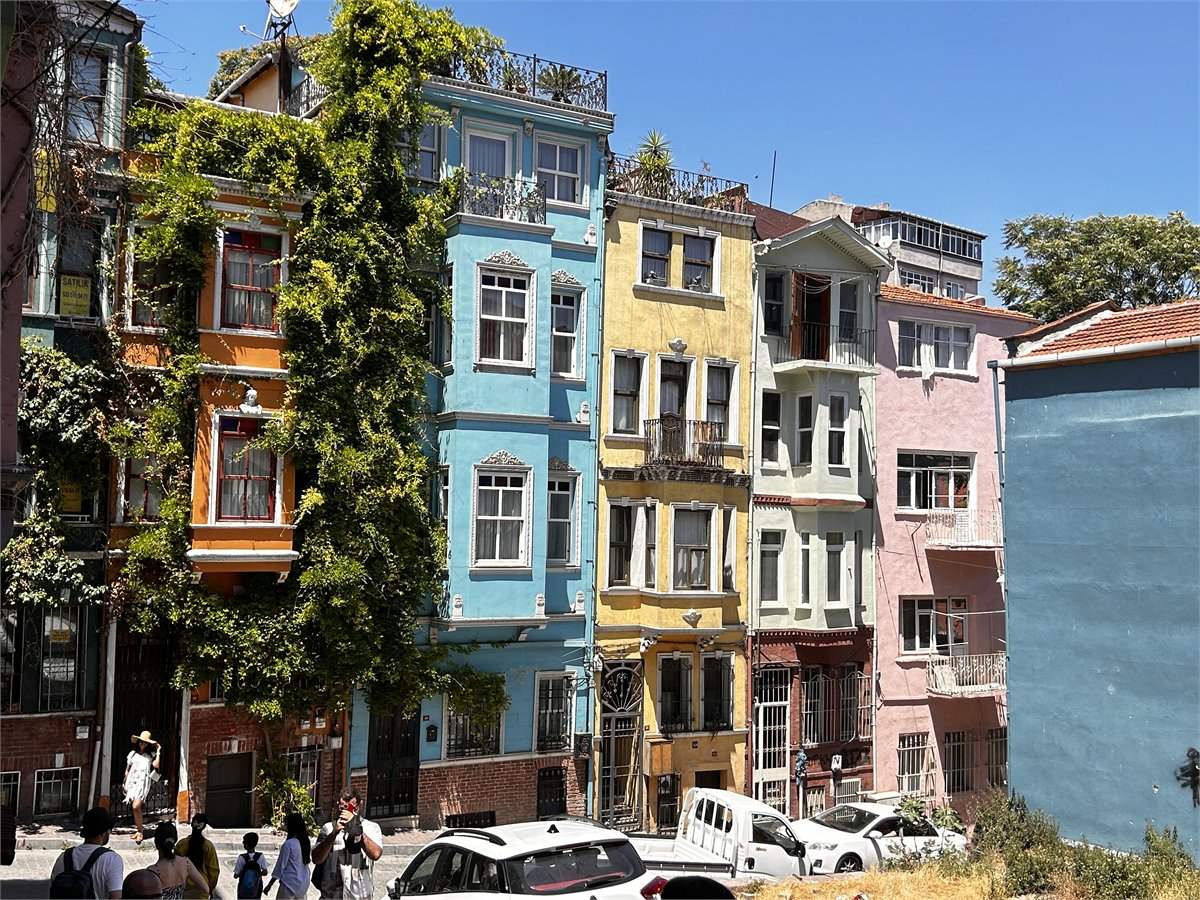
It combines naturally with Balat and Fener, which lie downhill towards the Golden Horn, and with the land walls themselves. On a private tailor-made Istanbul tour that pairing makes an outstanding half or full day for a second or third visit to the city — and it is the day our guests most often say they would not have found on their own.
Chora Church — frequently asked questions
Is the Chora Church worth visiting?
For anyone with an interest in art or Byzantine history, it is arguably the most rewarding building in Istanbul after Hagia Sophia. The fourteenth-century mosaics and the Anastasis fresco are the finest surviving Byzantine work anywhere, and it is far less crowded than Sultanahmet.
What is the Anastasis fresco?
The Harrowing of Hell, in the apse of the Chora's side chapel: Christ in white standing on the broken gates of Hell, pulling Adam and Eve out of their tombs by the wrists. It is widely considered the greatest single image in Byzantine art.
Is the Chora Church open?
It reconverted to a mosque in 2020 and reopened after restoration in 2024. Visiting hours, ticketing and access have changed several times, so it is worth confirming the current arrangement close to your visit — we check before every tour.
How do you get to the Chora Church?
It is in Edirnekapı near the old land walls, about twenty to thirty minutes by car from Sultanahmet. There is no tram stop nearby, which is why most visitors never make it — and why it stays quiet.
Chora Church in pictures
See it with a private local guide
Every tour we run is private and tailor-made — you choose the places, your licensed local guide plans the day with you, and a private car is always included.
Plan my private Istanbul tourTÜRSAB-licensed agency No. 15746 · skip-the-line entrance · no prepayment to enquire · a real person replies within 24 hours