- Distance
- About 550 km from Istanbul
- Best route
- Fly to Denizli (~1 hr), then 30 min by road
- What it is
- White travertine terraces + the Roman city of Hierapolis
- Status
- UNESCO World Heritage, with Hierapolis
- Barefoot
- Shoes are not allowed on the terraces
- Better as
- An overnight combined with Ephesus, if you can spare it
Private tours from €150 per group, per day
Licensed local guide, private car and driver, and skip-the-line priority entrance. The day runs at your pace, and the plan stays yours to change.
Get my free quoteTÜRSAB-licensed agency No. 15746 · nothing to pay to ask · a real person replies within 24 hours
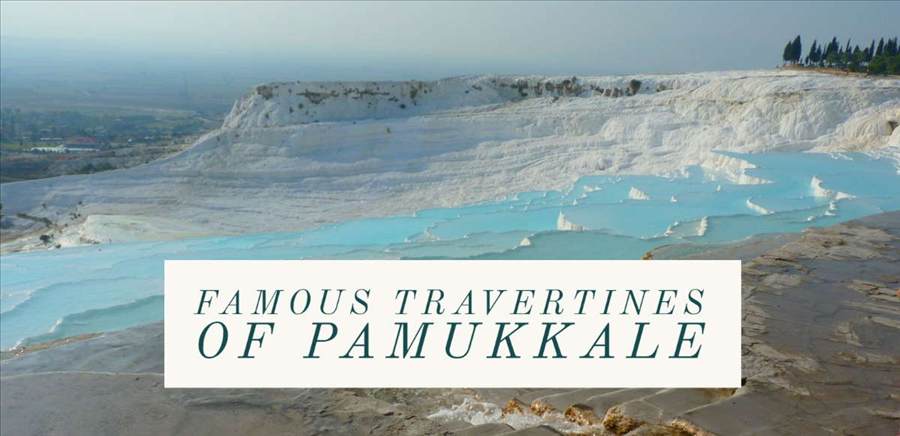
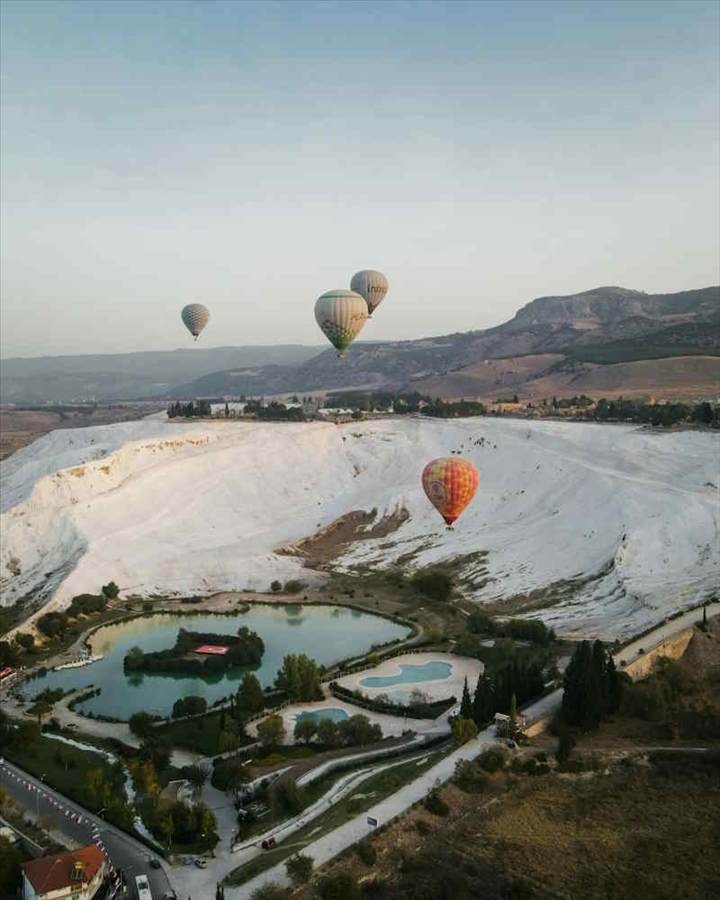
Pamukkale is about 550 km from Istanbul — roughly an hour by plane to Denizli, then half an hour by road, which makes a day trip possible but long. It is a hillside of white mineral terraces filled with warm turquoise water, with the ruins of the Roman city of Hierapolis spread across the plateau above. Both are on the same ticket, and most visitors underestimate the second.
What is Pamukkale?
The name means "cotton castle" in Turkish. Calcium-rich hot springs emerge at the top of the ridge and, as the water cools and flows downhill, it deposits white travertine — layer on layer, over thousands of years, until the whole hillside is a cascade of brilliant white basins. The water in them is warm, shallow and startlingly blue. It is a UNESCO World Heritage site, shared with Hierapolis above it.
How far is Pamukkale from Istanbul?
| How | Realistic time, one way |
|---|---|
| Fly to Denizli, then road | About 1 hour flying, plus 30 min transfer and airport time — the only sensible option for a day trip. |
| Overnight coach | Around 10–12 hours. Cheap, and you lose a night. |
| Train | There is no direct high-speed line to Pamukkale; rail routes involve changes and take far longer than flying. |
| Driving | Roughly 7 hours each way. Not a day trip. |
Is it worth it as a day trip?
Honestly: it is a long day, and we will tell you so before you book. First flight out, last flight back, and the middle of it is genuinely wonderful. If you have four days or fewer in Türkiye we would rather you spent them on Istanbul — see our three-day itinerary. If you have five or more, or Pamukkale is specifically why you came, it is very much worth doing.
Many people combine it with Ephesus, which is about three hours' drive away, as a two-day trip with an overnight in between. That is the version we would recommend if you can spare the night — it turns two rushed days into two comfortable ones.
Hierapolis, the part people forget
Above the terraces lies a full Roman and Byzantine city: a theater seating around 12,000 with much of its stage building intact, a colonnaded main street, a monumental gate, and one of the largest ancient necropolises in Anatolia, with well over a thousand tombs. It was a spa town — people came for these waters two thousand years ago and some came here to die, which is why the cemetery is so vast. Give it as much time as the terraces.
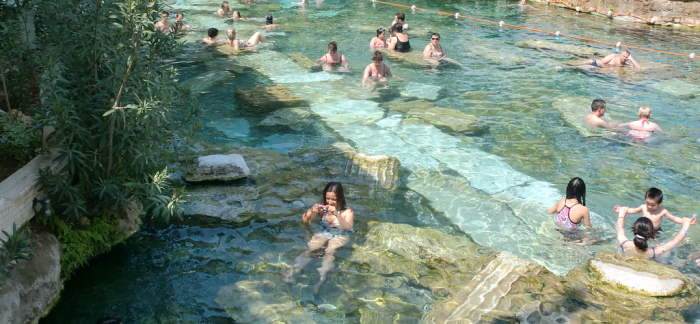
Cleopatra's Antique Pool
A separate, additionally ticketed pool where you swim among fallen marble columns in warm spring water. It is genuinely enjoyable and unmistakably touristy at the same time. Bring a swimsuit and a towel, and expect it to be busy in the middle of the day.
Practical advice
- You walk the terraces barefoot. Shoes are not allowed on the travertine, to protect it. The surface is ridged and slippery in places — take it slowly.
- Only some basins hold water. Flow is managed to preserve the formations, so which pools are full varies. This surprises people who arrive expecting every basin brimming.
- Take the top entrance if you are short of time; it puts you at Hierapolis and lets you walk down the terraces rather than up.
- Sun. The white surface reflects fiercely and there is almost no shade. Hat, water, sunscreen.
- Best light is late afternoon, when the terraces turn gold — though a day trip from Istanbul rarely lets you stay that late.
How we run it
As a private day: flights booked around your dates, a guide and car meeting you at Denizli, Hierapolis and the terraces at a pace that suits you, and back to Istanbul the same evening. Or as an overnight paired with Ephesus, which we prefer. We will tell you plainly if we think your dates make it a bad idea — the same honesty applies to our Gallipoli day trip, a very different but equally long day. Guide and private vehicle included, at an unhurried pace, from €150 per group per day plus travel. Tell us your dates and we will give you an honest answer first and a quote second.
Pamukkale from Istanbul — frequently asked questions
What is Pamukkale in Turkey?
How far is Pamukkale from Istanbul?
Can you visit Pamukkale from Istanbul in one day?
Can you get to Pamukkale from Istanbul by train?
Can you swim at Pamukkale?
Should I combine Pamukkale with Ephesus?
Pamukkale from Istanbul in pictures


See it with a private local guide
Every tour we run is private and tailor-made — you choose the places, your licensed local guide plans the day with you, and a private car is always included.
Plan my private Istanbul tourTÜRSAB-licensed agency No. 15746 · skip-the-line entrance · no prepayment to enquire · a real person replies within 24 hours