Private tours from €150 per group, per day
Licensed local guide, private car and driver, and skip-the-line priority entrance. The day runs at your pace, and the plan stays yours to change.
Get my free quoteTÜRSAB-licensed agency No. 15746 · nothing to pay to ask · a real person replies within 24 hours, usually the same day
A mosque is the one place in Istanbul where a visitor walks into somebody else's daily life rather than a museum. That is why it moves people, and why a few minutes of preparation make the visit so much easier for you and for the people praying.
Can you visit mosques in Istanbul?
Yes. Visiting mosques in Istanbul is open to everyone, of any faith or none, outside the five daily prayers. Entry is free at every working mosque, and the only rules are modest dress, shoes off at the door and quiet behavior inside. The great imperial mosques see more visitors than worshippers on most weekdays, and they are set up for it, with visitor entrances, shoe bags and loan scarves. A small neighborhood mosque is just as welcoming, but has none of that, so the etiquette below matters a little more there.
Timing: the five prayers and Friday
The single thing that decides how a mosque visit goes is the clock. Muslims pray five times a day, at times that follow the sun and so move a few minutes every day. Around each prayer, the big mosques close to sightseers: visits stop shortly before the call to prayer and start again when the prayer is over, usually after half an hour or a little more. Midday and afternoon are the two that catch visitors out, because they fall in the middle of a sightseeing day.
Friday is different. The Friday midday prayer is the main congregational prayer of the week, the mosques fill to the doors, and the pause for visitors is much longer. On a Friday we visit mosques in the morning or after mid-afternoon, and spend the middle of the day somewhere else, such as the Basilica Cistern or Topkapı Palace. For the exact times on your dates, the religious affairs directorate publishes official prayer times for Istanbul; the midday prayer is listed as Dhuhr and the afternoon one as Asr.
| When | What it means for a visit |
|---|---|
| Morning, before the midday prayer | The calmest time of day in the big mosques |
| Around the midday and afternoon prayers | Closed to visitors for roughly half an hour or more each time |
| Friday midday | The longest pause of the week; plan around it |
| Evening | Open until the sunset prayer, then busier with worshippers |
What to wear
The dress code is the same in every mosque in the city: shoulders and knees covered for everyone, hair covered for women, nothing see-through. That is all. Men in shorts are given a wrap at the big mosques, and women are lent scarves, so nobody is turned away. Your own light scarf is more comfortable than a borrowed one, though, and it saves a queue. Our post on what to wear in Istanbul covers the details, including what works in August heat.
Etiquette inside the mosque
None of this is complicated, and nobody expects a visitor to know the finer points. But these are the things that make the people around you comfortable:
- Shoes off before the carpet. There is a line, usually a step or the edge of the carpet. Carry your shoes in the bag you are given, or leave them on the racks.
- Stay in the visitor area. The big mosques rope off the front of the prayer hall for worshippers. Stay behind it, even when it is empty.
- Never walk in front of someone praying. If someone is praying between you and where you want to go, walk around behind them, or wait.
- Phones on silent, voices low. Photos are generally fine in the big mosques, without flash. Never photograph people at prayer, and ask before you photograph anyone up close.
- No eating, and no feet pointed at the front. If you sit down on the carpet, sit cross-legged or with your legs tucked to one side.
Women may notice a separate area for women at the back or in a gallery. That is for worship; as a visitor you stay in the visitor area with everyone else. There are donation boxes by the doors. Giving is entirely voluntary, and many visitors like to leave something for the upkeep of a building they have enjoyed.
Which mosques to visit in Istanbul
There are thousands of mosques in Istanbul, and you could spend a week on the great ones alone. For most visitors, these six give the whole story:
- The Blue Mosque, the Sultan Ahmed Mosque, for its six minarets and the İznik tiles that give it its nickname. It has a separate visitor entrance and the longest line of any mosque in the city.
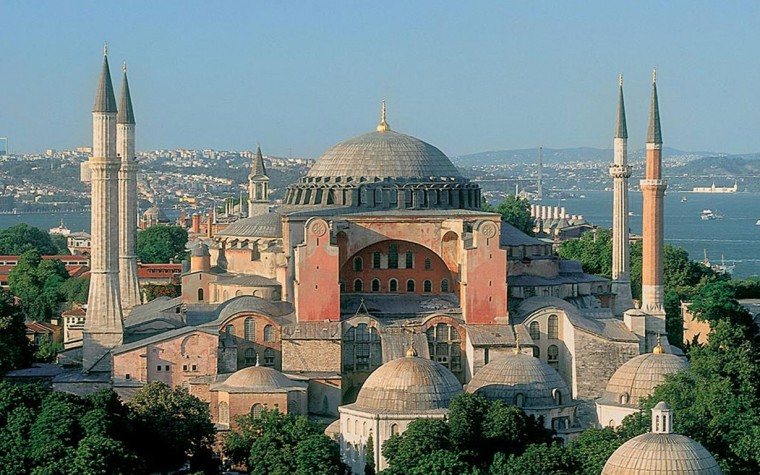
- Hagia Sophia, a working mosque again since 2020. Foreign visitors use a ticketed route through the upper gallery, while the prayer hall below is kept for worshippers. The official Hagia Sophia Mosque website posts its own notices.
- Süleymaniye, the mosque we would choose if you could see only one. It is the masterpiece of the architect Sinan, and UNESCO's listing for the Historic Areas of Istanbul names its complex as the climax of Ottoman architecture. It is calmer than the Blue Mosque, and Süleyman the Magnificent lies in a tomb in its garden.
- Rüstem Pasha, a small mosque up a flight of steps above the shops beside the Spice Bazaar. Its walls are covered with some of the finest İznik tiles anywhere, and most people walk straight past the stairs.
- Ortaköy, the light, almost theatrical mosque on the water's edge under the Bosphorus Bridge. Our guide to Ortaköy pairs it with the neighborhood around it.
- Eyüp Sultan, at the top of the Golden Horn, one of the most important places of pilgrimage in Türkiye. It is busy with families, especially at weekends, and fits well with a morning in Balat and Fener.
Two more are easy to add on the way: the New Mosque at the end of the Galata Bridge, and Kariye, the former Chora church, now a mosque, whose mosaics and frescoes visitors can still see.
How we plan mosque visits on a private day
On a day with us, the prayer times shape the plan rather than interrupt it. We usually start at the Blue Mosque early, move to Hagia Sophia with tickets already in hand, and fit the Cistern or the old city's quieter corners around the midday prayer. Your guide carries the day's prayer times, explains what you are looking at inside, and knows which side doors lead to the shortest queue. During Ramadan the rhythm changes a little; our post on Ramadan in Istanbul explains how.
If you would like a guide for the mosques, look at our Best of Istanbul tour or the other private Istanbul tours, from €150 per group, not per person, with a licensed guide. Entry tickets, such as Hagia Sophia's, and tips are not included; tips are customary but always at your discretion. Tell us your dates and ask us for a quote, and we will build the day around the prayer times for you.
Visiting mosques in Istanbul — frequently asked questions
Can non-Muslims visit mosques in Istanbul?
Yes. Visitors of any faith, or none, are welcome in Istanbul's mosques outside prayer times. The big historic mosques receive thousands of visitors a day and have separate visitor entrances. All that is asked is modest dress, shoes off and quiet behavior.
Can women visit mosques in Istanbul?
Yes. Women visit every mosque a tourist is likely to see, alone or with others. Cover your shoulders and knees and put a light scarf over your hair. The big mosques lend scarves and wraps free at the visitor entrance, so nobody is turned away for arriving unprepared.
What is the dress code for visiting mosques in Istanbul?
Shoulders and knees covered for everyone, hair covered for women, and shoes off at the door. Clothes should not be see-through or very tight. Our post on what to wear in Istanbul goes through it in detail.
Do mosques in Istanbul close for prayer?
To visitors, yes. There are five prayers a day, and the big mosques pause tourist visits from shortly before each call to prayer until the prayer ends, usually around half an hour or a little more. The Friday midday prayer means the longest pause, so plan Friday mosque visits for the morning or mid-afternoon.
Do you have to pay to enter mosques in Istanbul?
No, with one exception. The Blue Mosque, Süleymaniye and every other working mosque are free. Hagia Sophia is free for worshippers, but since January 15, 2024, foreign visitors buy a ticket for a separate route through the upper gallery. Donation boxes are entirely voluntary.
How many mosques are there in Istanbul?
Thousands. Almost every neighborhood has its own, from Ottoman imperial mosques to small modern ones on residential streets. For a visitor, half a dozen are worth planning around: the Blue Mosque, Hagia Sophia, Süleymaniye, Rüstem Pasha, Ortaköy and Eyüp Sultan.
See it with a private local guide
Every tour we run is private and tailor-made — you choose the places, your licensed local guide plans the day with you, and a private car is always included.
Plan my private Istanbul tourTÜRSAB-licensed agency No. 15746 · skip-the-line entrance · no prepayment to inquire · a real person replies within 24 hours, usually the same day