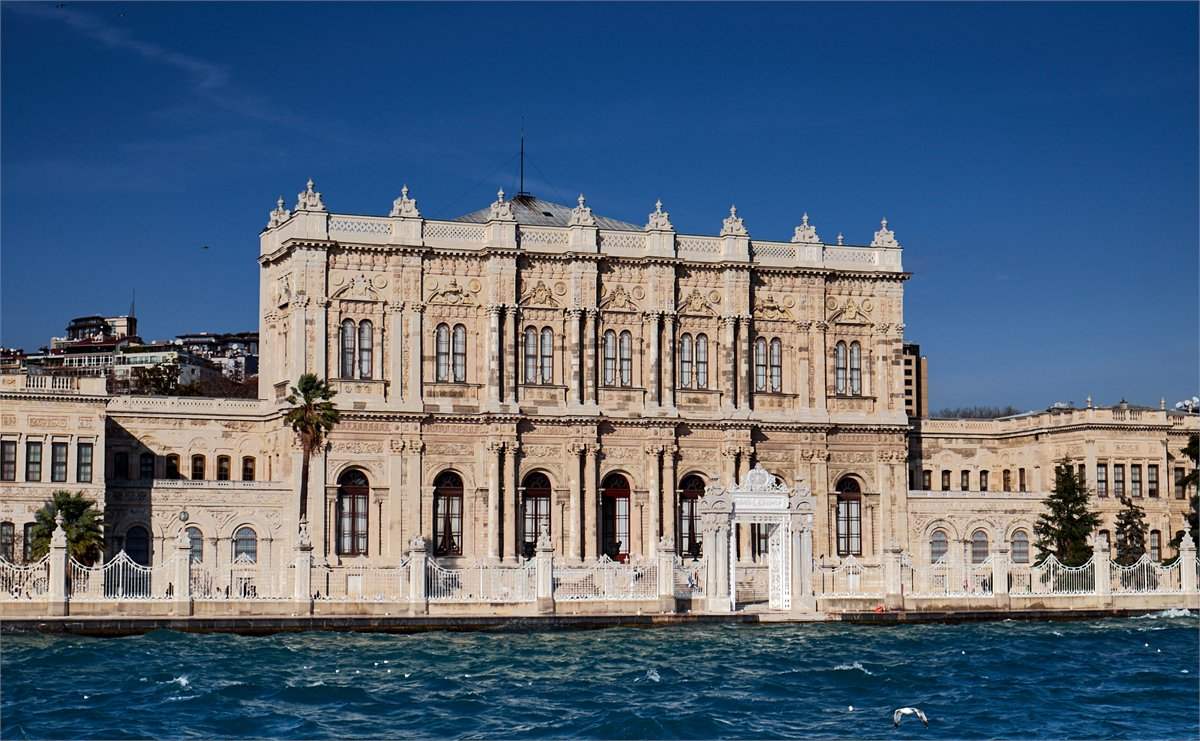
- Built
- 1451–1452 for Mehmed II — in roughly four months
- Nickname
- Boğazkesen — 'the strait-cutter'
- Where
- European shore, ~25–30 min north of Sultanahmet
- Faces
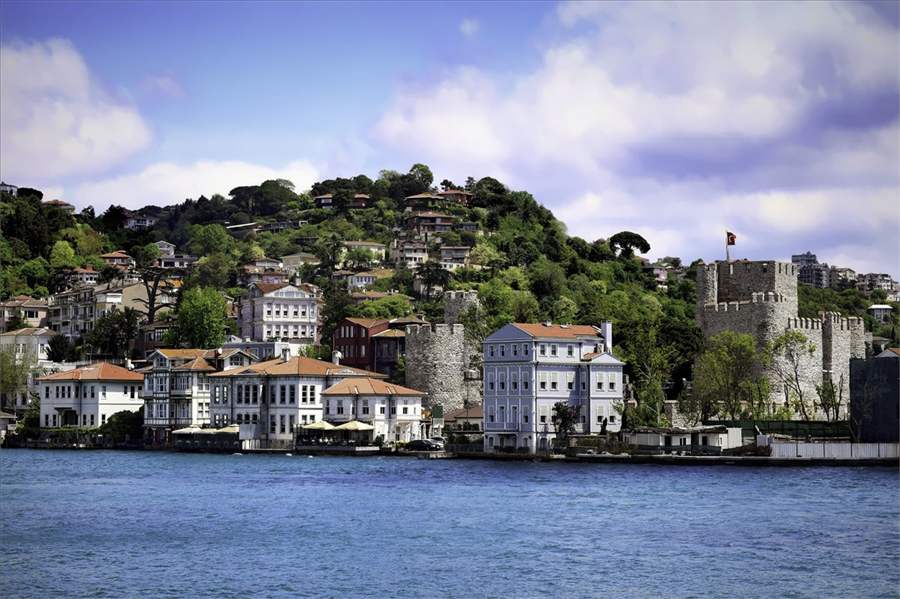
- Anadolu Hisarı, built c. 1394, across the water
- Tickets
- There is a charge, and it changes — ask us for the current rate
- Best seen from
- The water — every Bosphorus cruise passes beneath it
Private tours from €150 per group, per day
Licensed local guide, private car and driver, and skip-the-line priority entrance. The day runs at your pace, and the plan stays yours to change.
Get my free quoteTÜRSAB-licensed agency No. 15746 · nothing to pay to ask · a real person replies within 24 hours
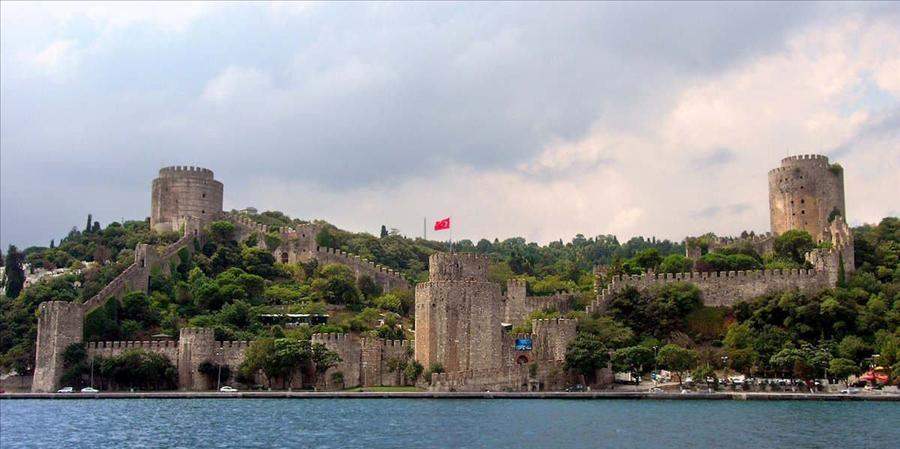
Rumeli Hisarı is the enormous fortress halfway up the Bosphorus that Mehmed II built in four months to cut Constantinople off from the sea — and it worked. Within a year the city had fallen and the Roman Empire, a thousand years after Rome itself, was finished. It is one of the few places in Istanbul where a single building explains an entire outcome.
What is Rumeli Hisarı?
A fortress on the European shore at the narrowest point of the Bosphorus, where the strait pinches to about 700 meters. Its Turkish nickname is Boğazkesen — "the strait-cutter", though the word also reads as "throat-cutter", and both meanings were intended. It faces Anadolu Hisarı, a smaller fortress built on the Asian bank around 1394. Together they closed the channel.
Built in four months
Mehmed II ordered it in the spring of 1452, when he was twenty and had not yet taken the city. Three of his viziers were each made personally responsible for one great tower, on the understanding that failure would be theirs alone. Thousands of masons and labourers worked through the summer. It was finished in August — a fortress of three main towers, thirteen smaller ones and connecting walls, put up in roughly four months on a steep hillside.
Then he mounted cannon at the water's edge and announced that every ship passing would stop and pay. A Venetian captain named Antonio Rizzo tested this and refused. His ship was sunk, his crew executed, and Rizzo impaled. Constantinople's grain route from the Black Sea was closed. The siege began the following April.
What you see today
The walls and towers survive substantially intact, climbing the slope in a rough triangle. Inside are steep paths, grass, a small open-air theater used for summer concerts, and the shell of a mosque. The pleasure of the place is the climb and the view: from the upper walls you look straight down the throat of the Bosphorus, with the Fatih Sultan Mehmet Bridge overhead and the Asian shore close enough to make the strategy obvious.
Access to some towers and walkways is restricted, and has been at various times for restoration — the steps are steep, uneven and mostly without railings. This is not a place for anyone unsteady on their feet, and it is genuinely hard work in summer heat.
Tickets, opening hours and getting there
- There is an admission charge, and it has changed several times in recent years — we would rather send you to the official site than print a figure that is wrong by the time you read it. Ask us and we will tell you the current rate.
- Closed one day a week in most seasons; check before making the trip out.
- Getting there: it is about 25–30 minutes by road from Sultanahmet, on the shore road north past Ortaköy. Buses run along the coast, and the neighborhood of Bebek, one of the pleasantest waterfronts in the city, is a short walk south.
- Time needed: 45–60 minutes inside, longer if you climb everything.
Is Rumeli Hisarı worth visiting?
It depends how you are traveling. On a first visit of two or three days, no — you would be trading Topkapı or the Chora mosaics for it, and both are richer. But if you are interested in the conquest, if you have four days or more, or if you are already heading up the Bosphorus, it is excellent: uncrowded, dramatic, and it makes sense of the whole strait.
The alternative, and for many visitors the better one, is to see it from the water. Every Bosphorus cruise passes directly beneath it, and from a boat you understand the fortress far better than from inside it — you see exactly what the guns were pointing at.
Combining it with the rest of the day
The natural shape is a Bosphorus day: up the shore road with stops at Dolmabahçe and Ortaköy, lunch at Bebek, the fortress in the afternoon, and back down as the light goes. That works as an extended version of day two on our two-day itinerary. We can also do it by private boat, landing rather than driving.
Private, guide and car included, at an unhurried pace, from €150 per group per day — tell us your dates and we will say honestly whether it earns a place in your days.
Rumeli Hisarı — frequently asked questions
What is Rumeli Hisarı?
How much is a ticket for Rumeli Hisarı?
Is Rumeli Hisarı worth visiting?
Why was Rumeli Hisarı built?
How long does it take to visit Rumeli Hisarı?
Rumeli Hisarı in pictures
See it with a private local guide
Every tour we run is private and tailor-made — you choose the places, your licensed local guide plans the day with you, and a private car is always included.
Plan my private Istanbul tourTÜRSAB-licensed agency No. 15746 · skip-the-line entrance · no prepayment to enquire · a real person replies within 24 hours